

06 August 2026
Bangchak Joins TGO Forum, Affirming “Quality and Credibility” Are Vital for Carbon Credits Supports a Stronger Thai Carbon Market with Greater ASEAN and Global Connectivity
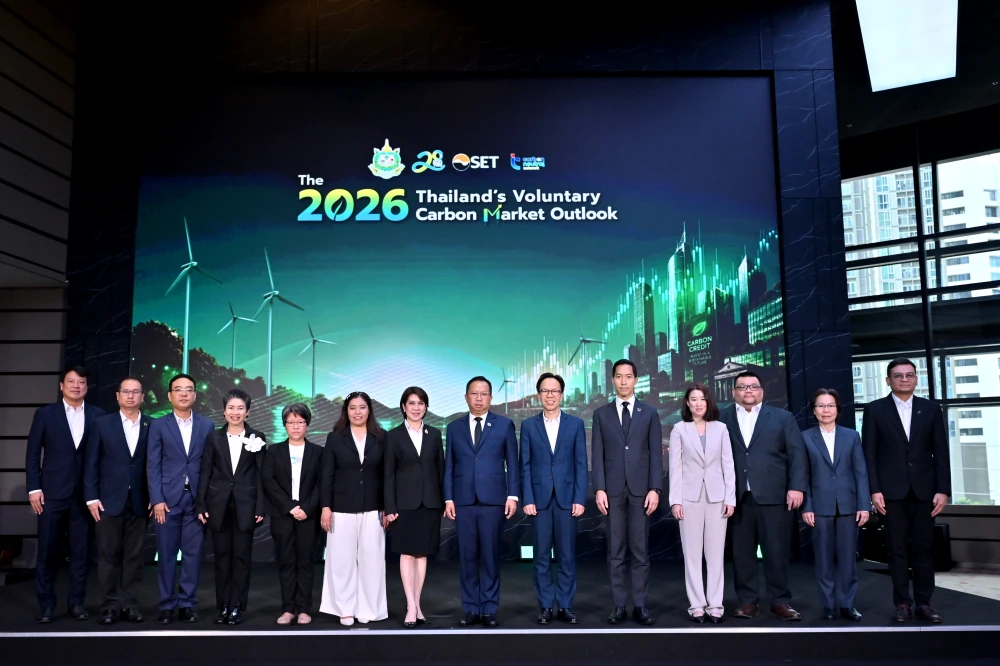
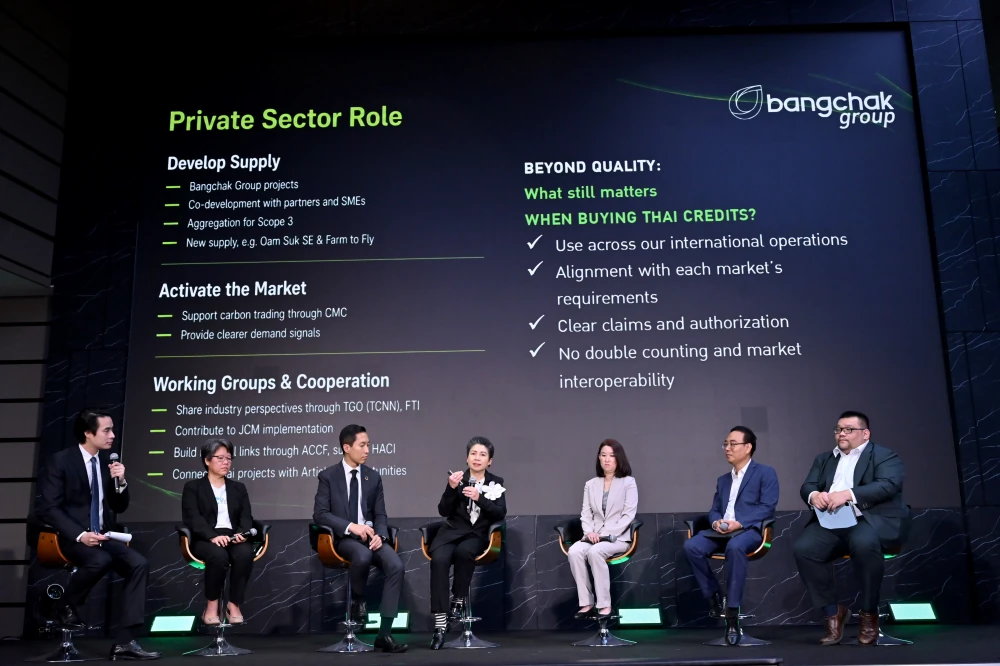
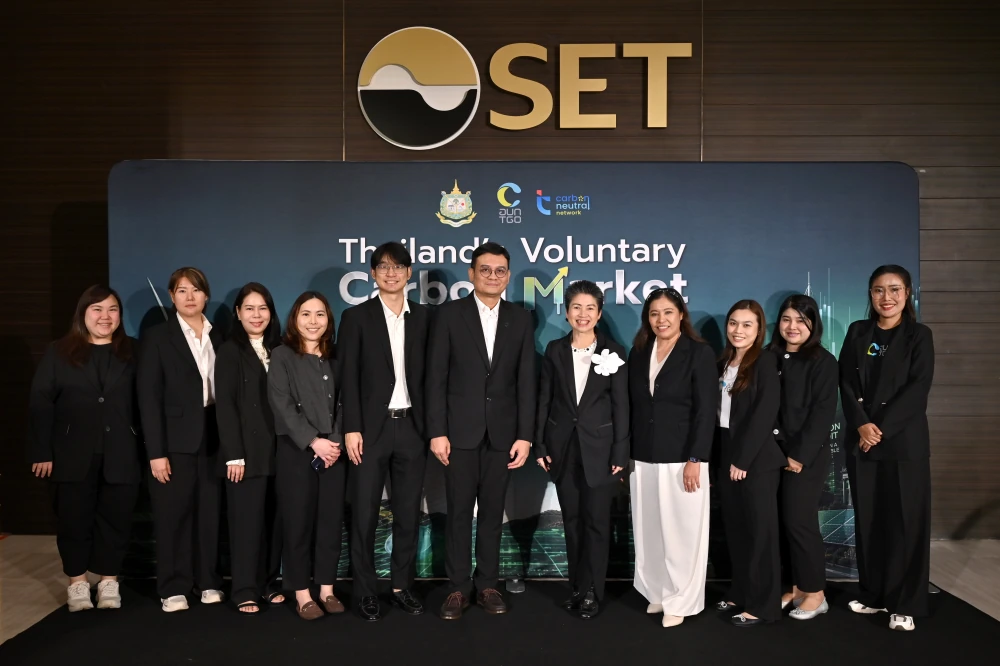
Recently, Mrs. Gloyta Nathalang, Senior Executive Vice President, Sustainability Management and Corporate Communications, Bangchak Corporation Public Company Limited, and Chair of the Carbon Markets Club, participated in a panel discussion at the announcement of the results of The 2026 Thailand’s Voluntary Carbon Market Outlook. The event was organized by the Thailand Greenhouse Gas Management Organization (Public Organization), or TGO, at the Stock Exchange of Thailand.
Mr. Nakorn Tangavirapat, Executive Director of TGO, delivered the opening remarks and outlined the direction of Thailand’s carbon market, which is shifting from competition based on price and volume toward quality, transparency and credibility, in line with the global trend toward high-integrity carbon credits. The survey findings, presented by Ms. Anothai Sangthong, Director of the Communications and Carbon Credit Registry Office at TGO, and Mr. Boonrod Yaowapruek, Managing Director of The Creagy Company Limited, indicated that Thai businesses are increasingly aware of climate issues and view climate change as a business opportunity. However, most remain in the preparation stage, leaving a gap between interest and actual market participation - and significant potential for further market growth.
Mrs. Gloyta joined the panel discussion titled “Raising Thai Carbon Standards and Unlocking New Opportunities in Global Markets,” which brought together perspectives from across the carbon-market value chain, including standard-setting bodies, buyers, project developers, trading-infrastructure providers and international-cooperation experts. The panelists were Dr. Paweena Panichayapichet, Senior Manager, Carbon Credit Certification Office, TGO; Mr. Surapon Bupkosum, Senior Vice President and Head of Sustainability Solutions Development, the Stock Exchange of Thailand; M.L. Nathasit Diskul, President of Bangkok Aviation Fuel Services Public Company Limited; Ms. Wuthiorn Pojareesakul, Head of Corporate Strategy and Development, Thai Airways International Public Company Limited; and Mr. Chatthep Chanyam, Senior Policy Analyst, Global Green Growth Institute (GGGI) Thailand.
The panelists agreed that Premium T-VER will be an important mechanism for aligning Thai carbon credits with international standards, meeting demand for high-quality credits and providing a foundation for standards that can gain mutual recognition across ASEAN. Thailand must, however, accelerate the development of authorization procedures for international carbon credit transfers, connect registry systems, reduce project development and verification costs, and narrow the gap between buyers and sellers. These measures are essential to enabling credible cross-border transactions and supporting Thailand’s role as a regional carbon-market hub.
Sharing Bangchak’s experience, Mrs. Gloyta emphasized that carbon credit use must follow the “Reduce First” principle: organizations should prioritize reducing greenhouse gas emissions within their own operations and use credits only to offset emissions that cannot yet be avoided. Bangchak has used carbon credits to offset emissions from both individual activities and carbon-neutral events as a means of building awareness and understanding of climate change. Carbon credit purchasing decisions should therefore consider more than price. They should also take into account the intended use of the credits and the associated claims, as well as credibility, verifiability, safeguards against double counting, market acceptance and co-benefits for communities and the environment. Organizations operating in multiple countries must select credits that meet applicable requirements and are accepted in the relevant markets. Mrs. Gloyta views Premium T-VER as an important foundation for high-quality Thai carbon credits, while eligibility under CORSIA will broaden their potential applications, expand market opportunities and generate income for project developers.
Bangchak Group participates in the market as a buyer, a developer of projects within the Group and a co-developer of projects with partners. In addition, the emissions-reduction attributes of Sustainable Aviation Fuel, or SAF, can be separated and transferred through a Book and Claim system, allowing organizations to use those attributes to manage Scope 3 emissions even when the fuel is not physically delivered for the same flight or at the same location. Bangchak also contributes to the development of Thailand’s carbon market through working groups and collaborative networks such as the Thailand Carbon Neutral Network (TCNN), while the Carbon Markets Club the Carbon Markets Club helps stimulate market activity and extends this work to the ASEAN Common Carbon Framework (ACCF). The ACCF is a regional private-sector collaboration that complements the High-Integrity ASEAN Carbon Initiative (HACI), an initiative proposed by Thailand through the Department of Climate Change and Environment. Together, these efforts aim to develop ASEAN carbon markets that are credible, standardized and interconnected, while expanding access to international markets for Thai carbon credits and emissions-reduction projects.
Looking toward 2030, Mrs. Gloyta said the success of the carbon market should not be measured solely by the volume of credits traded. The market must also attract financing and investment, enable credible projects to materialize, provide SMEs and supply-chain businesses with access to the market, connect Thai credits with international buyers, distribute benefits to farmers, communities and small businesses, and strengthen connectivity among carbon markets across ASEAN.
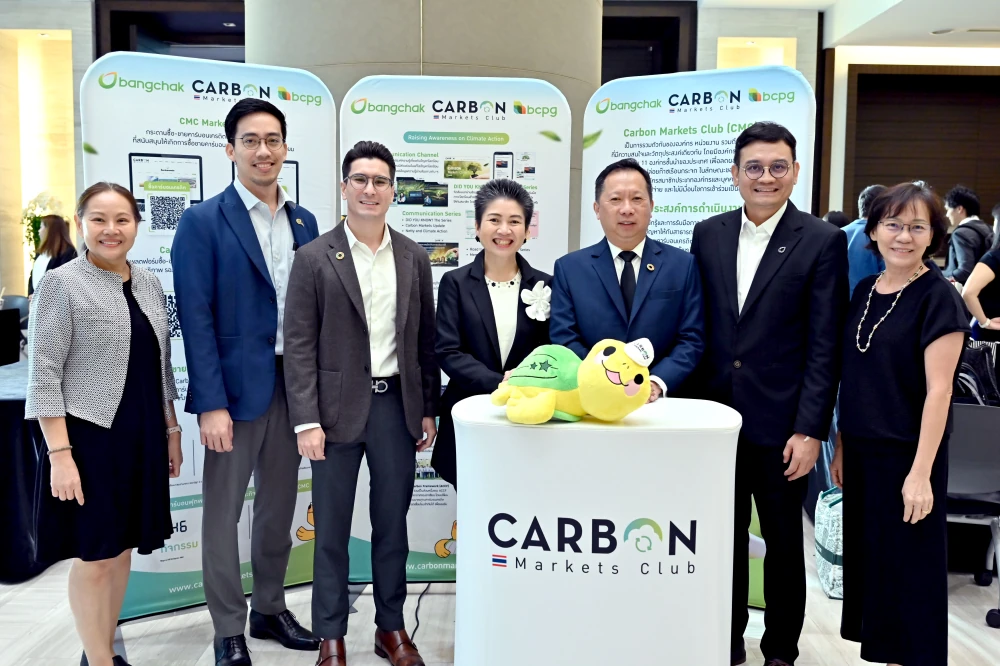
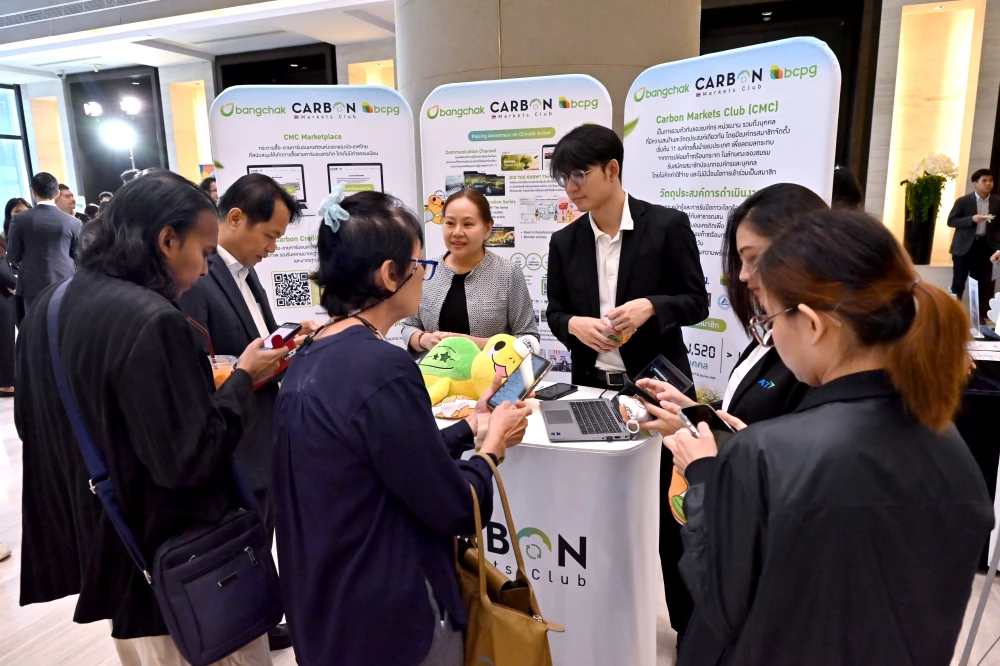
The Carbon Markets Club also participated in the Business Matching activities held throughout the event, supporting connections among buyers, sellers, project developers, financial institutions and business partners.