16 November 2026
Bangchak Group Partners with Four Academic Institutions to Advance Farm to Fly Pongamia Research to Expand Land-Use Options and Strengthen Thailand’s Bioenergy Security
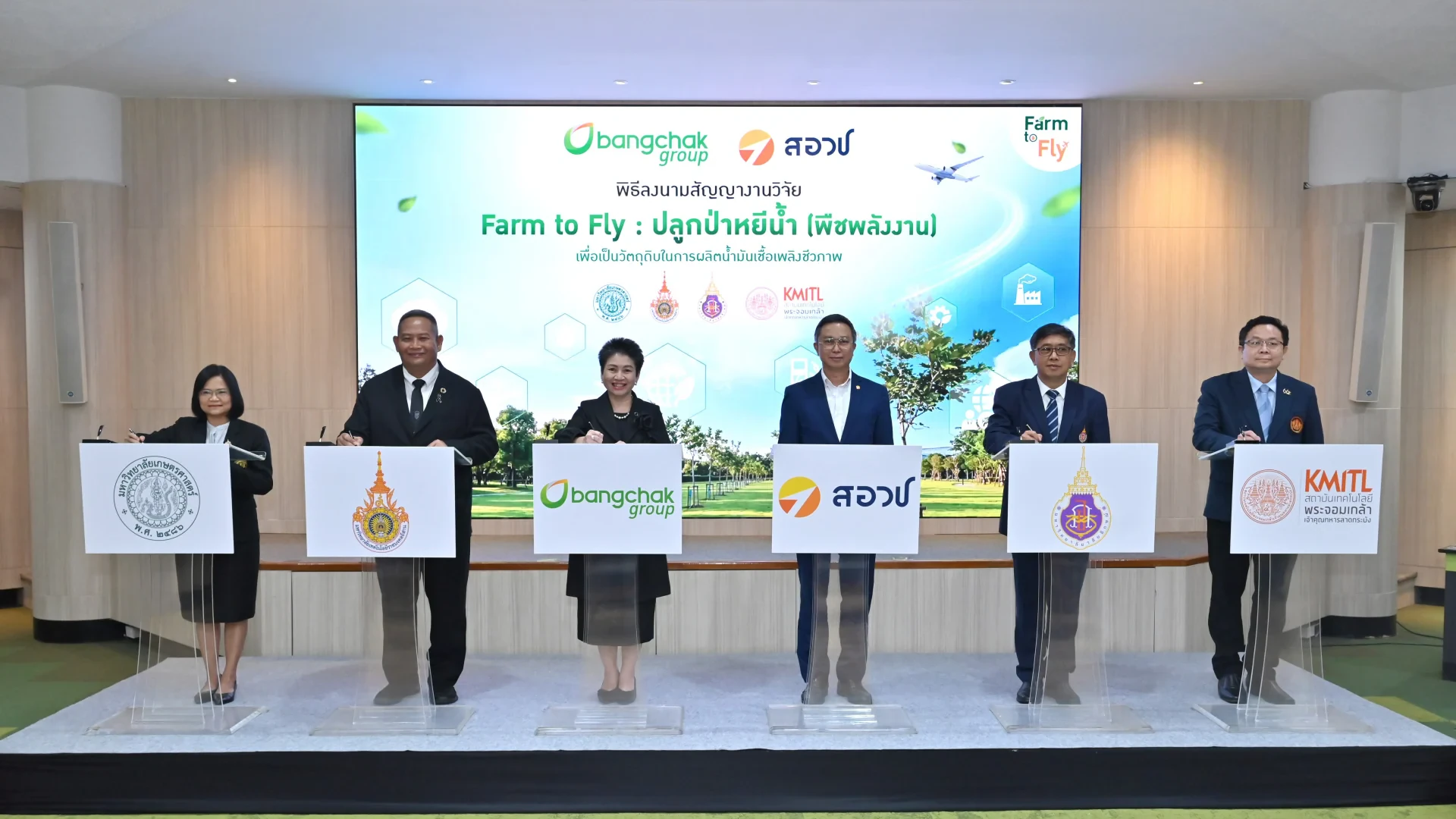
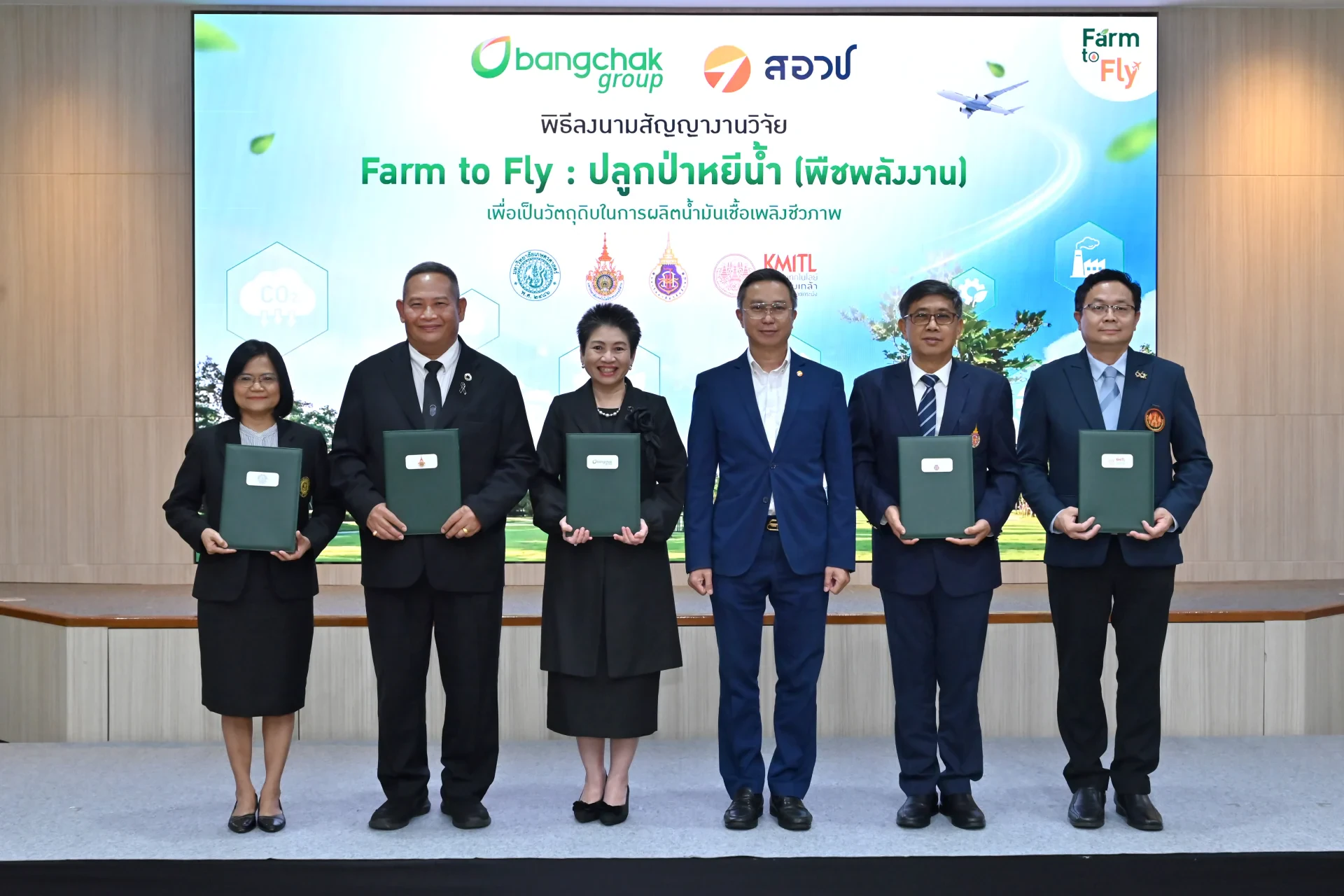
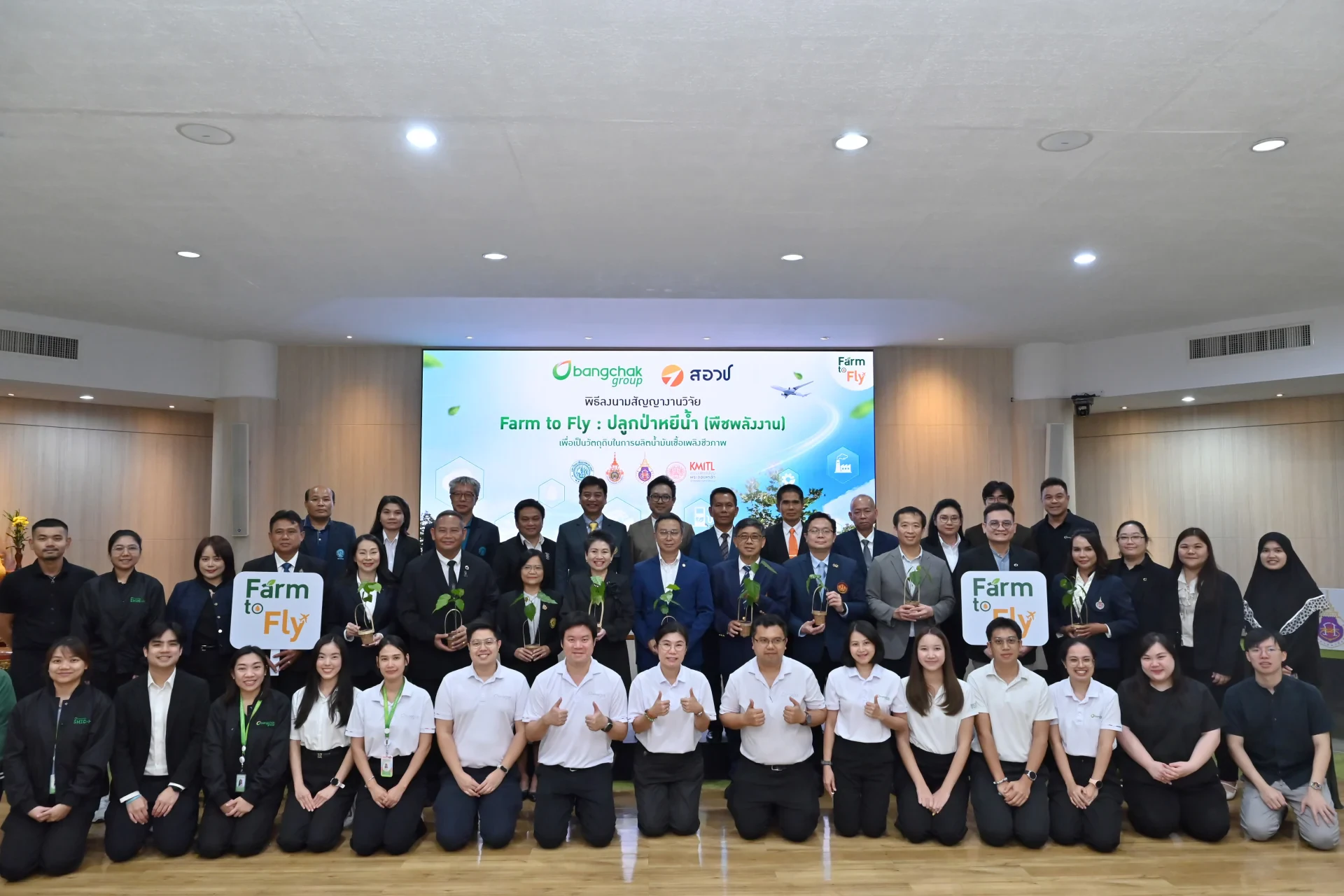
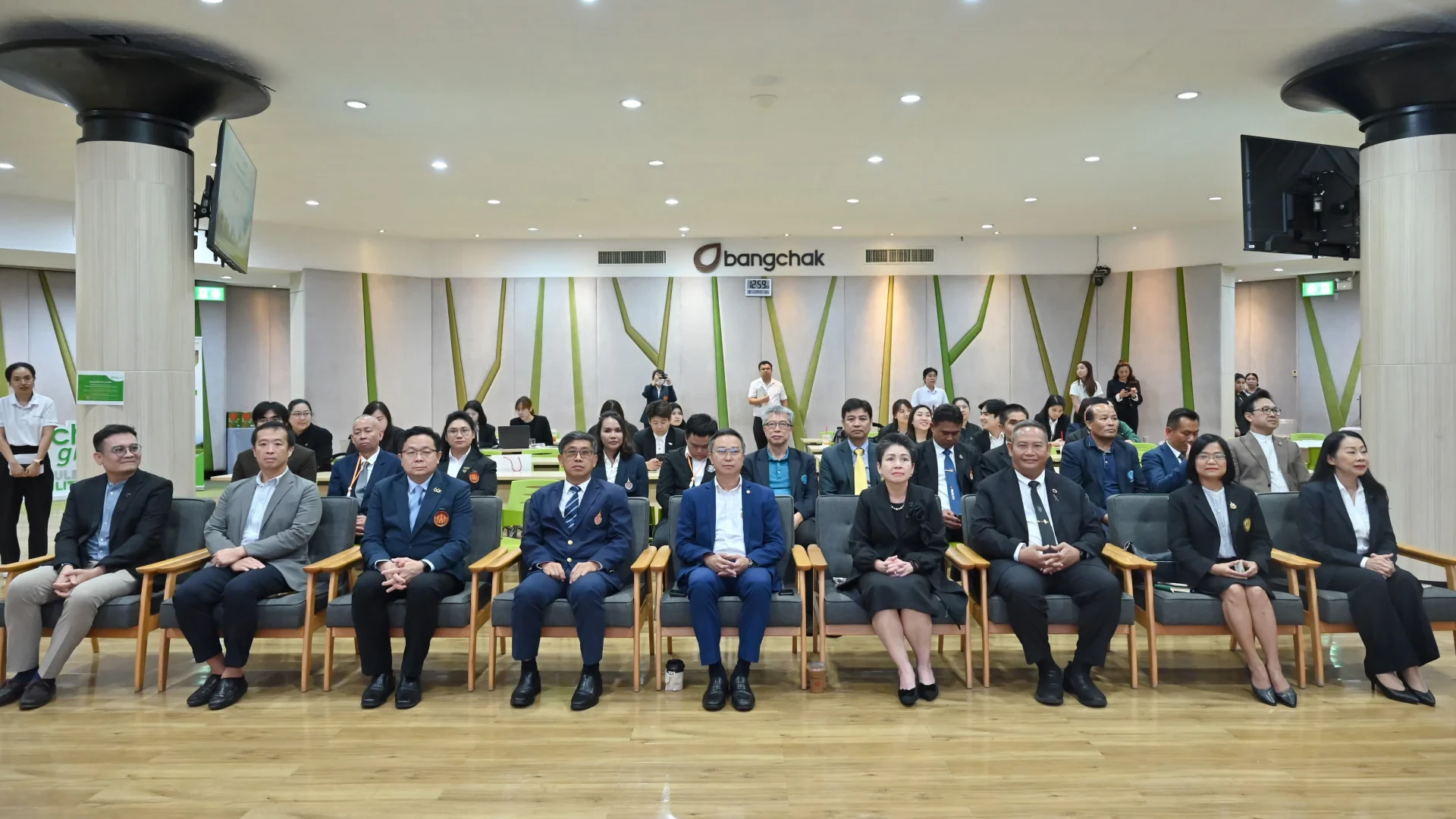
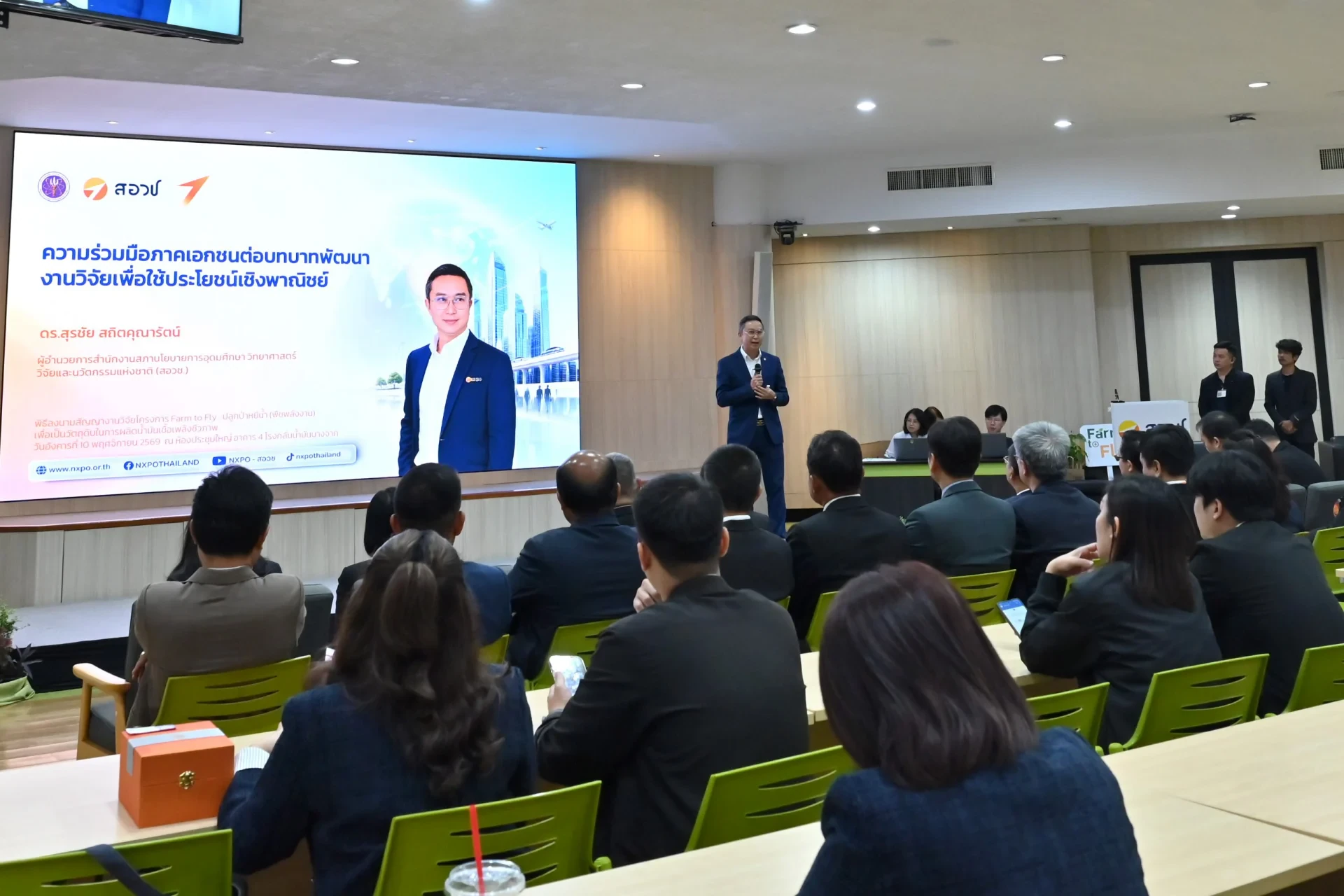
On November 10, 2026, Bangchak Group, through Bangchak Corporation Public Company Limited, signed research agreements with Kasetsart University, Rajamangala University of Technology Isan, Walailak University, and King Mongkut’s Institute of Technology Ladkrabang. The collaboration will study pongamia cultivation and its potential as a biofuel feedstock under the Farm to Fly initiative. The signing ceremony took place at Bangchak’s Phra Khanong Refinery, with Dr. Surachai Sathitkunarat, President of the Office of the National Higher Education, Science, Research and Innovation Policy Council (NXPO), serving as witness.
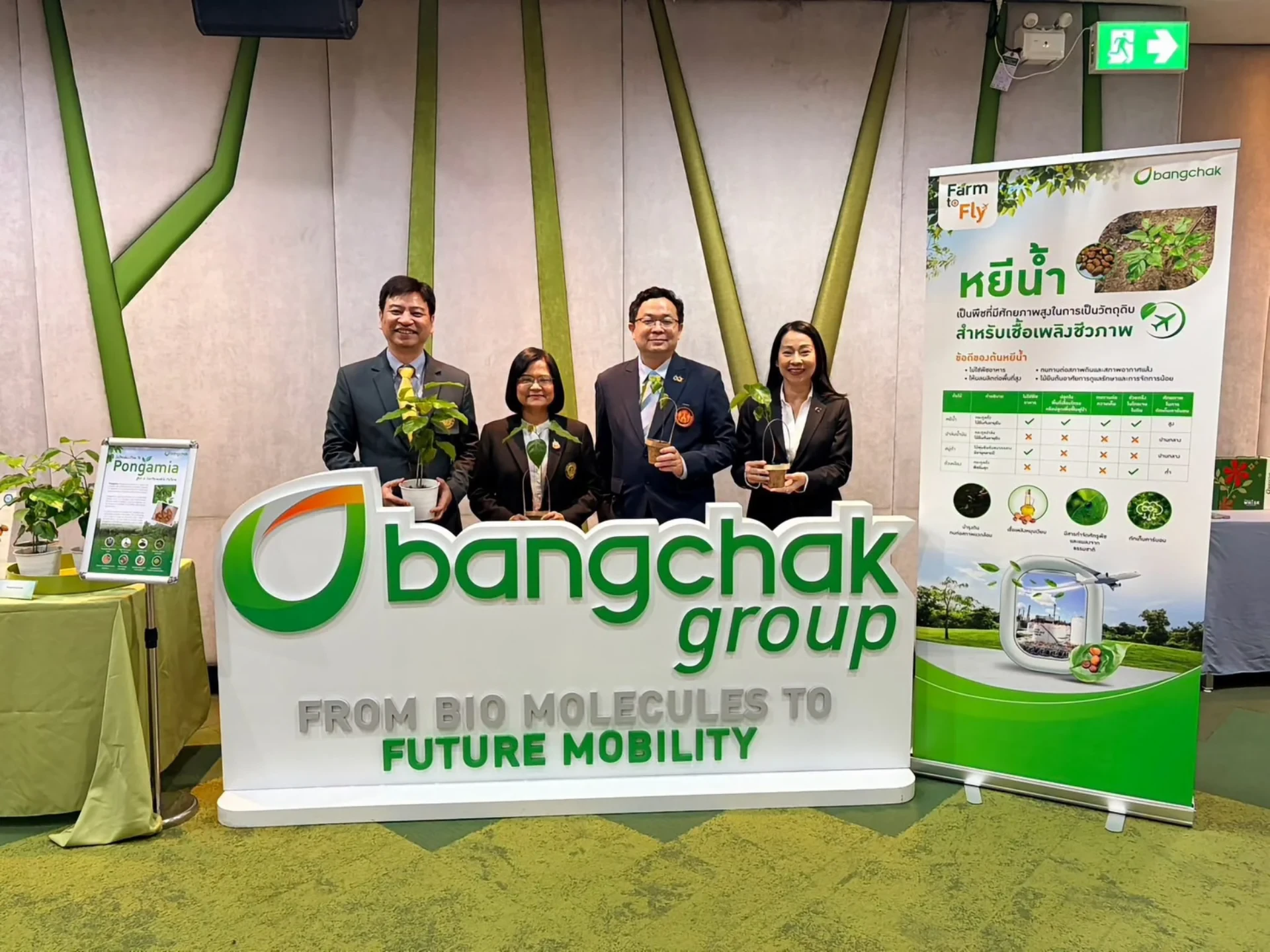
Pongamia is a leguminous tree whose seeds contain extractable oil. Farm to Fly aims to assess its potential as an additional biofuel feedstock, building on Fry to Fly, which collects used cooking oil for the production of sustainable aviation fuel (SAF). By connecting research, agriculture, and the energy industry, the project seeks to expand Thailand’s long-term options for energy and land use.
The collaboration has a 10-year framework, with an initial three-year research agreement. The study covers cultivation, crop care, and the collection of yield and cost data to assess whether pongamia could become a commercially viable biofuel feedstock. Trial plots in several provinces cover more than 100 rai and span different growing conditions and planting methods. The research includes forest-style and agricultural planting, trials of different tree spacings and land management practices, and intercropping with commercial crops. The study will explore how the land can be used productively and how farmers could earn supplementary income while the pongamia trees mature.
The four academic institutions will conduct research based on questions and hypotheses agreed with Bangchak. Kasetsart University’s research team will share knowledge and data with the partner institutions, while Bangchak will bring industry requirements into the research. The partners will collect data on cultivation, harvesting, yields, and costs to assess commercial feasibility.
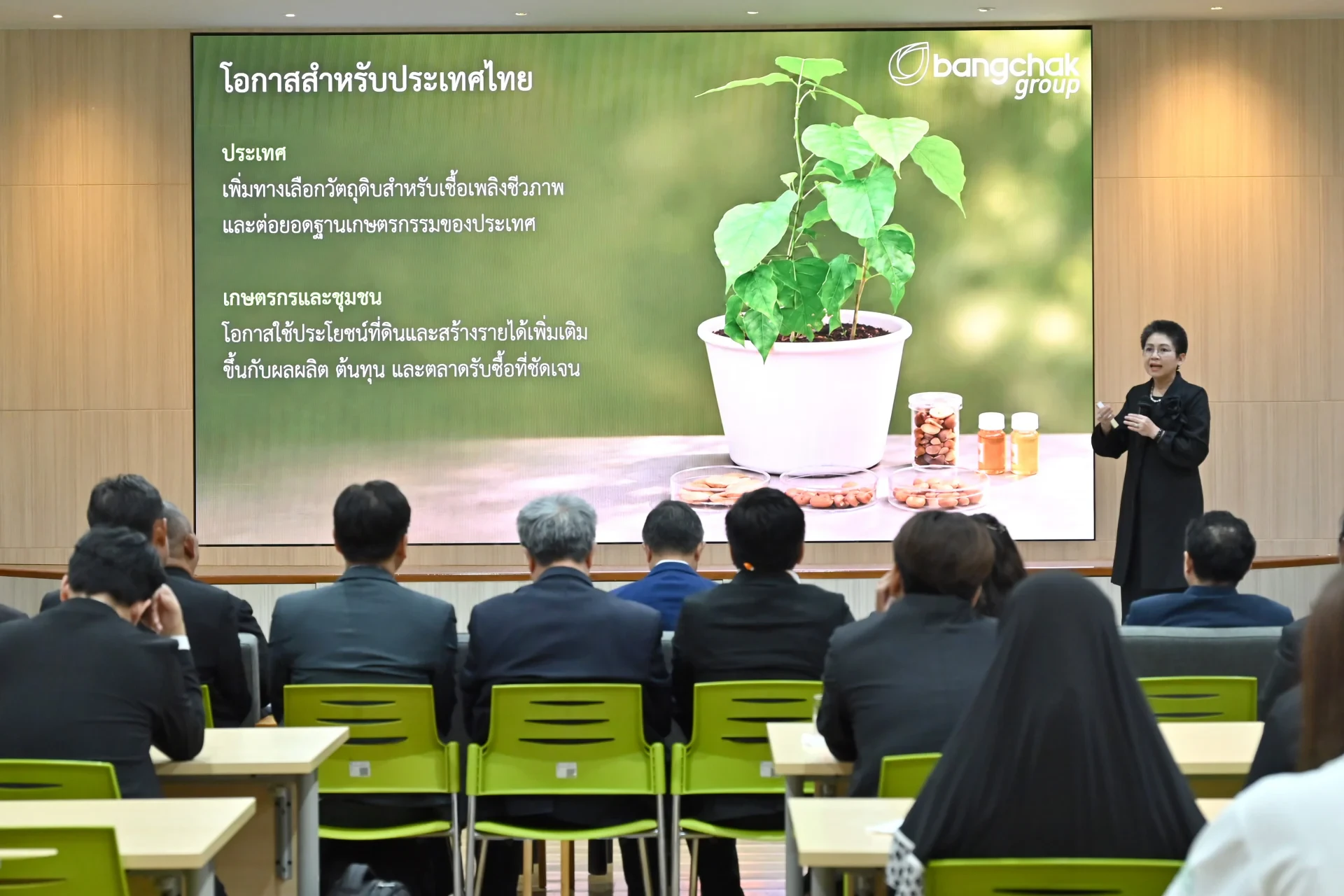
Mrs. Gloyta Nathalang, Senior Executive Vice President, Sustainability Management and Corporate Communications, Bangchak Corporation Public Company Limited, said Bangchak Group is committed to developing alternative feedstocks for biofuels and SAF to strengthen long-term supply chain security. Farm to Fly brings together Thailand’s agricultural strengths and the expertise of the four academic institutions to generate research data that can inform decisions about commercial development. She added that the study covers saline soils and land where previous use has reduced soil fertility. It will assess the suitability and economic viability of pongamia cultivation in these areas and explore additional land-use options and future economic opportunities for farmers.
Dr. Surachai Sathitkunarat, President of NXPO, said that bringing research and innovation into commercial use requires cooperation between the private sector and higher education institutions. This includes jointly defining research questions based on industry needs, developing knowledge and technologies, and assessing feasibility to support future investment and scale-up. Farm to Fly connects the knowledge and expertise of higher education institutions with industry needs. NXPO prioritizes policies and initiatives that connect research, technology, funding, and markets to help put research findings into practice, create economic value, and strengthen Thailand’s long-term competitiveness.
Assistant Professor Dr. Samonporn Suttibak, Vice President of Kasetsart University’s Chalermphrakiat Sakon Nakhon Province Campus, said the university was pleased to join Farm to Fly, which aligns with its mission to apply agricultural and environmental knowledge for the benefit of the country. The university will draw on its expertise in cultivation, soil and water management, and field data collection to study pongamia’s growth, yields, and production costs under local field conditions. It will also share knowledge and data with partner institutions to produce comprehensive findings that can inform practical decisions.
Northeastern Thailand has extensive areas of saline and low-fertility soils. If pongamia grows well and produces good yields in these areas, it could create opportunities to rehabilitate and use degraded land while generating new income for local farmers.
Associate Professor Dr. Kosit Sriputhon, President of Rajamangala University of Technology Isan (RMUTI) and Chair of the Council of Presidents of Rajamangala Universities of Technology, said the collaboration between RMUTI and Bangchak Group began with a memorandum of understanding signed at the university’s Khon Kaen Campus to research and develop pongamia cultivation using smart farming technologies. After establishing trial plots in Khon Kaen Province, the university expanded the research to its Surin Campus and its Roi Et Campus in the Thung Kula Rong Hai area, bringing the total research area to 24 rai. The sites will serve as model plots for collecting scientific data on plant growth, resource management, costs, and yields under the initial research plan for 2026–2029.
RMUTI views its Roi Et Campus in Thung Kula Rong Hai as a strategic site for applying its expertise in agricultural technology and innovation to energy crop development. The collaboration aims to connect cultivation trials, smart farming, and agricultural technology with the development of energy feedstocks and their use in industry.
Associate Professor Dr. Suwit Wuthisuthimethavee, Vice President for Strategic Planning and Governance, Walailak University, said the university is committed to advancing cooperation in modern agriculture through Farm to Fly. It will bring together academic expertise, research, technology, and innovation in smart farming to study pongamia as an alternative energy crop while improving agricultural productivity and resource management. The university has designated 20 rai at its Smart Farm and Landscape Architecture Center as a model plot to study plant growth, yields, and the potential of pongamia seed oil for biofuel and alternative energy production. The university aims to put the results of the academic and research collaboration into practice and contribute to Thailand’s secure and sustainable development.
Professor Dr. Wisanu Pecharapa, Vice President for Research and Innovation, King Mongkut’s Institute of Technology Ladkrabang (KMITL), said the institute is ready to contribute its expertise in science, technology, and innovation to support pongamia cultivation under Farm to Fly. It will focus on applying technology to improve planting, crop care, and plot management under local conditions, and on developing ways to share technology and knowledge with farmers and local networks so they can apply them in the field.
The collaboration also offers an opportunity to apply research findings and develop efficient pongamia cultivation practices that could be adopted more widely in agricultural areas. This could expand livelihood options, create economic value for the agricultural sector, and support the development of Thailand’s feedstock supply chain for bioenergy and SAF.
Several countries are exploring pongamia’s potential for SAF production. A demonstration project in Japan used pongamia seed oil to produce SAF that met international fuel quality standards. Australia and Laos are developing cultivation plots to study pongamia’s potential as a biofuel feedstock. In Thailand, research with the four academic institutions will help answer questions about cultivation practices and economic viability under local field conditions, providing a foundation for developing a commercial feedstock supply chain.