16 November 2026
Thailand Carbon Markets Club Joins Carbon Market Partners in ASEAN to Renew Memorandum of Collaboration at COP31 in Turkey
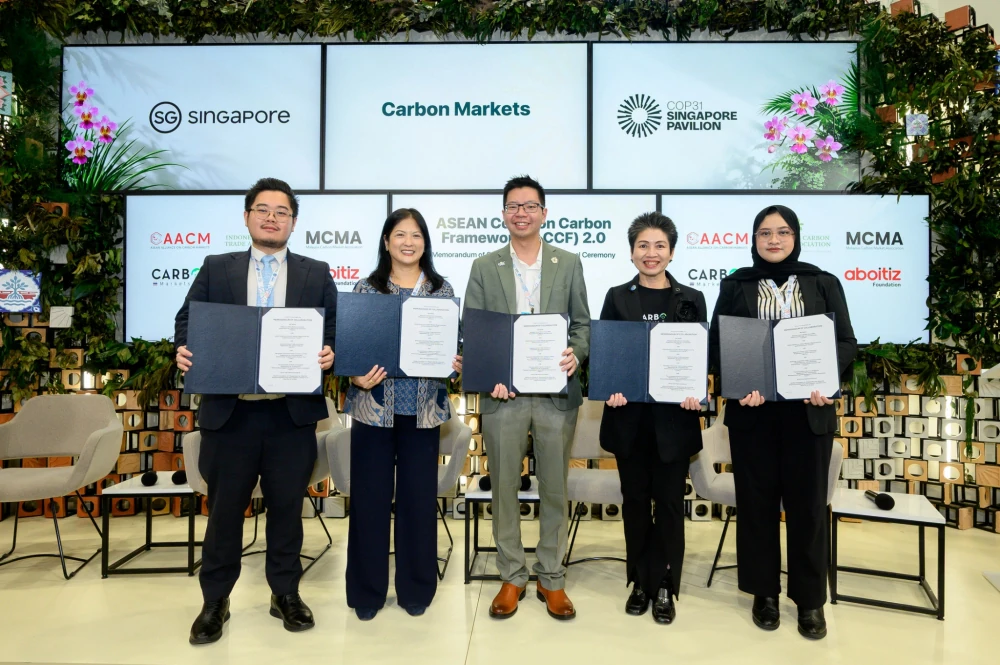
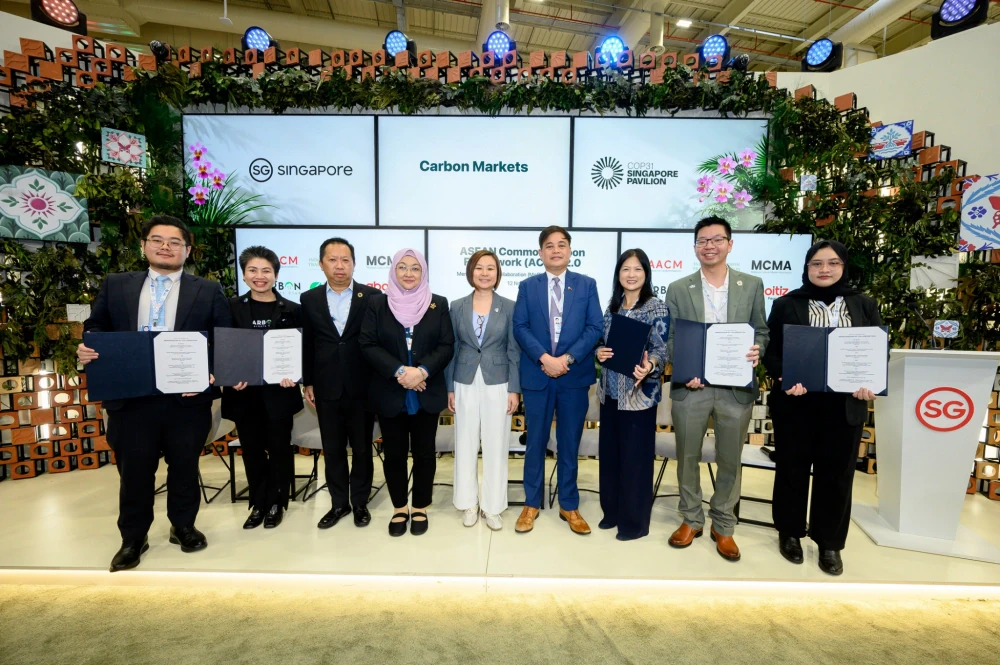
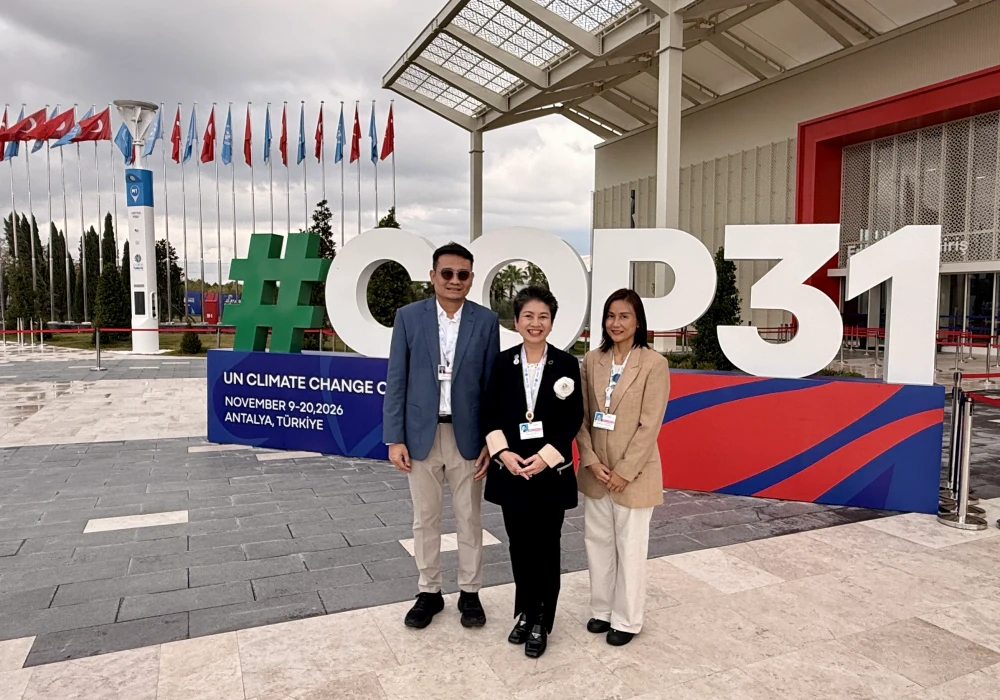
On November 12, 2026, the signatories to the ASEAN Common Carbon Framework (ACCF), comprising Thailand Carbon Markets Club (TCMC), the Malaysia Carbon Market Association (MCMA), the Singapore Sustainable Finance Association (SSFA), the Indonesia Carbon Trade Association (IDCTA), and the ASEAN Alliance on Carbon Markets (AACM), signed a renewal of their Memorandum of Collaboration (MoC) for a further two years at COP31 in Türkiye. The renewal reaffirmed their shared commitment to regional cooperation and to developing high-integrity, interoperable carbon markets across ASEAN.
As part of the renewal, Aboitiz Foundation, Inc. from the Philippines formally joined the ACCF and signed the MoC as an observer. Its participation broadens regional representation in the ACCF and reflects growing interest among ASEAN member states in linking national carbon market development with regional coordination.
The renewal also marks progress in aligning approaches on the demand side. AACM and CMC joined IDCTA, SSFA, and MCMA in supporting the Shared Principles under the Coalition to Grow Carbon Markets, a government-led initiative co-chaired by Kenya, Singapore, and the United Kingdom. Launched in November 2025 at the COP30 Business and Finance Forum, the Shared Principles set out six pillars for the credible corporate use of carbon credits alongside deep decarbonization. With all five signatories now supporting the Shared Principles, the ACCF will explore ways to contribute to and advise global initiatives, including those led by the Coalition, so that carbon market development reflects ASEAN’s circumstances.
Under SSFA’s chairmanship, which began in the second half of 2026, the ACCF established five priorities for its 2026–2028 strategy.
- Bring the ACCF’s work into formal ASEAN processes.
- Broaden the signatory base to ensure wider and more balanced regional representation.
- Bring ASEAN carbon markets into closer alignment with global standards.
- Coordinate with the Coalition to Grow Carbon Markets and contribute ASEAN perspectives to its work.
- Establish an ASEAN Community of Practice (CoP) as a structured platform for sharing knowledge and consulting on longer-term ACCF projects.
The ACCF’s work covers three main areas.
- Supply and demand - Develop interim guidance for companies on using high-integrity carbon credits to support demand. Build capacity among financiers through a preliminary due diligence framework for assessing key criteria for carbon project financing.
- Market infrastructure - Examine the legal nature and status of verified carbon credits and explore ways to reduce cross-border barriers, better align market rules, and enable the use of credits interchangeably across ASEAN carbon markets.
- Capacity building - Work with international partners to provide technical and advisory support for carbon project financing and bring the ACCF’s work to ASEAN forums.
Since its establishment at COP29 in November 2024, with MCMA serving as chair for the first 18 months, the ACCF has gained wider regional recognition. It was acknowledged in the Joint Media Statement of the 57th ASEAN Economic Ministers’ Meeting and the ASEAN Joint Statement on Climate Change to COP30. It was also cited in the ASEAN Capital Markets Forum’s Guidance for an ASEAN Voluntary Carbon Market. Over the past year, the ACCF has supported national and independent carbon standards aligned with benchmarks set by the Integrity Council for the Voluntary Carbon Market (ICVCM) and the Carbon Offsetting and Reduction Scheme for International Aviation (CORSIA), helping strengthen the integrity and market acceptance of ASEAN carbon credits.
Under its renewed strategy, the ACCF will prioritize putting its work plans into practice alongside policy alignment and capacity building. These efforts aim to strengthen confidence in ASEAN-origin carbon credits, facilitate cross-border cooperation, and support the region’s climate objectives.
Mrs. Gloyta Nathalang, Senior Executive Vice President, Sustainability Management and Corporate Communications, Bangchak Corporation Public Company Limited, and Chair of Thailand Carbon Markets Club (TCMC), said, “ASEAN’s strength lies in its diversity. Cooperation between governments and businesses can build on the region’s progress in developing carbon markets, strengthening credit quality and interoperability while respecting national priorities. CMC contributes by supporting government efforts to connect markets across the region, engaging businesses, sharing knowledge, and bringing the practical experience of project developers and buyers to the ACCF. Through these efforts, we hope to help channel financing toward high-quality projects that deliver measurable emissions reductions and benefits for local communities.”
Ms. Oi-Yee Choo, ACCF Co-Chair, Co-Lead of SSFA’s Carbon Markets Workstream, and CEO of Climate Impact X, said, “This renewal marks the next phase for the ACCF. As chair, SSFA will work closely with the Singapore government, which will assume the ASEAN chairmanship in 2027, to complement its market-building efforts from the private sector. We are broadening ASEAN representation within the ACCF and warmly welcome Aboitiz Foundation from the Philippines as an observer. By engaging with initiatives such as the Coalition to Grow Carbon Markets, we can bring ASEAN’s perspective to the global agenda and help carbon markets develop more equitably. Together with all our signatories, we are committed to expanding high-integrity carbon markets across ASEAN and beyond.”
Dr. Renard Siew, President of the Malaysia Carbon Market Association (MCMA), said, “The ACCF originated as one of the priority deliverables under Malaysia’s ASEAN chairmanship, championed by the ASEAN Business Advisory Council Malaysia (ASEAN-BAC Malaysia) to strengthen regional cooperation on carbon markets. Its renewal reflects our shared commitment to making that ambition a reality by developing credible and interoperable carbon markets across ASEAN. As countries pursue their respective climate goals, regional cooperation will be critical to building market confidence, strengthening institutional capacity, and opening up cross-border opportunities. Over the next two years, we must turn dialogue into tangible outcomes. Our goals must include expanding carbon markets, delivering meaningful climate results, mobilizing investment, and creating lasting value for the region.”
Mr. Dharsono Hartono, Permanent Chair of the ASEAN Alliance on Carbon Markets (AACM), said, “The renewal of the ACCF Memorandum of Collaboration reflects our shared commitment to advancing carbon markets across ASEAN. The next phase will focus on implementation. By coordinating more closely, sharing knowledge, and addressing common challenges together, we can strengthen confidence in ASEAN-origin carbon credits and create more opportunities for credible cross-border cooperation. AACM looks forward to working with fellow signatories to advance the ACCF’s priorities and support the continued development of high-integrity carbon markets across the region.”
Dr. Riza Suarga, President of the Indonesia Carbon Trade Association (IDCTA), said, “The ongoing El Niño phenomenon is a stark reminder of our growing vulnerability to climate change and the intensifying impacts of a warming planet, already being felt in every region of the world. Commitments alone are no longer enough. It is time for the ACCF to turn ambition into concrete action that safeguards our planet and secures a sustainable future for generations to come. IDCTA and our ASEAN partners remain firmly committed to playing a leading role in this effort by promoting the development and implementation of carbon projects that meet the highest standards of quality, transparency, credibility, and environmental integrity. Together, we must turn climate ambition into action and make that action deliver lasting results.”
Ms. Ana Margarita Hontiveros, President of Aboitiz Foundation, Inc., said, “Aboitiz Foundation is proud to join the ACCF as an observer, representing the Philippines’ nature-based solutions (NbS) industry and Carbon Coalition groups. We welcome the opportunity to share our experience, learn from our ASEAN partners, and help build credible carbon markets across the region. Ultimately, our collective efforts must go beyond carbon credits to create real opportunities for people, protect our natural resources, and deliver lasting benefits to communities.”
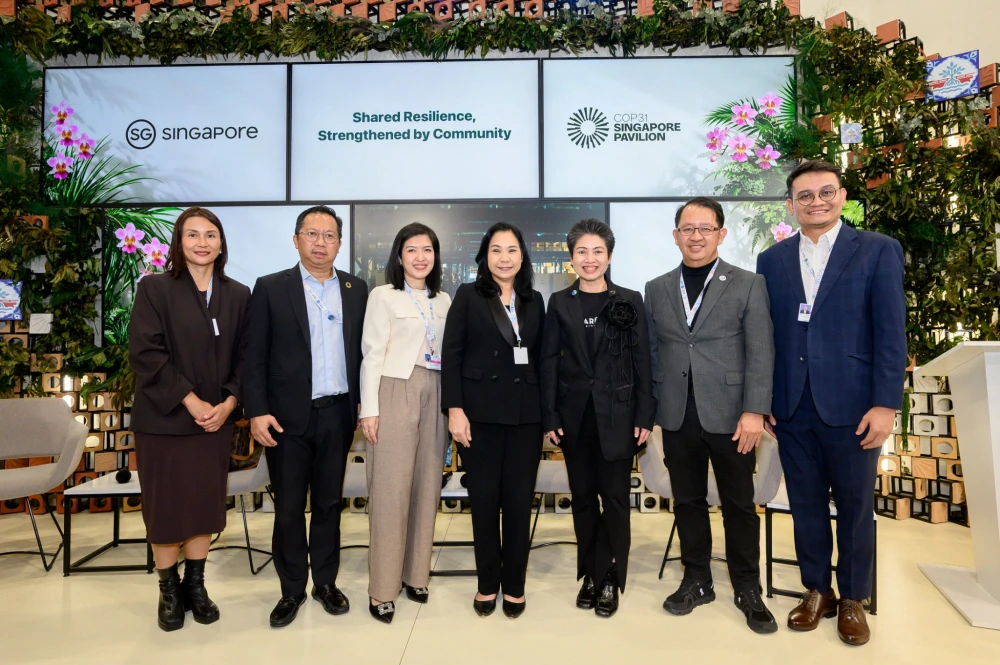
Honorary witnesses from several countries attended the ceremony. Mr. Nakorn Tangavirapat, Executive Director of the Thailand Greenhouse Gas Management Organization (TGO), served as CMC’s honorary witness. Other attendees included Dr. Kanchana Wanichkorn, Director of Sectoral Development at the ASEAN Secretariat, and Assoc. Prof. Wongkot Wongsapai, Vice President of the Office of the National Higher Education, Science, Research and Innovation Policy Council (NXPO).
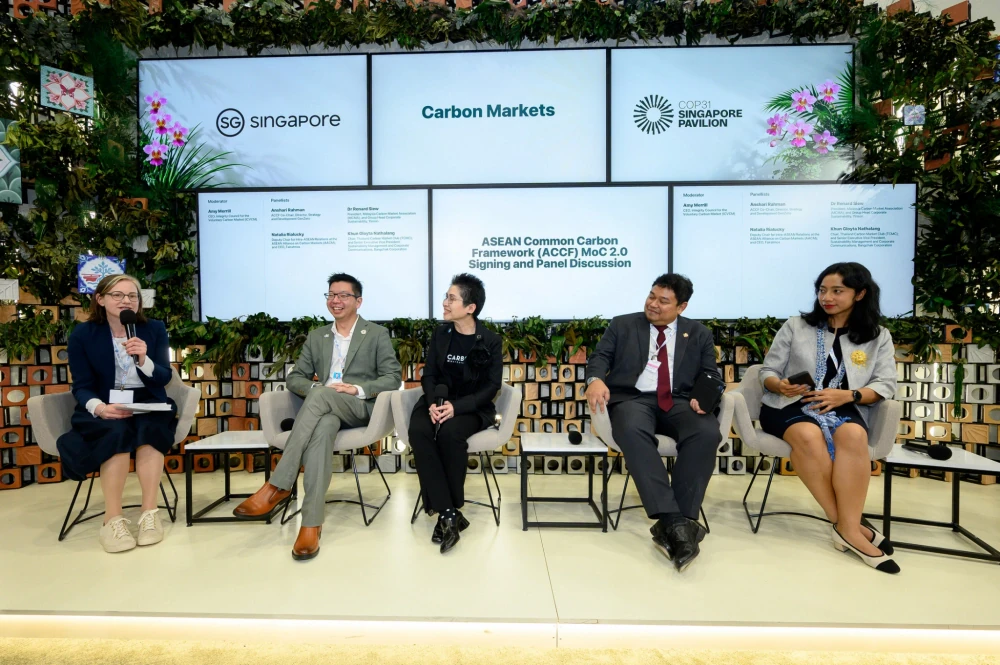
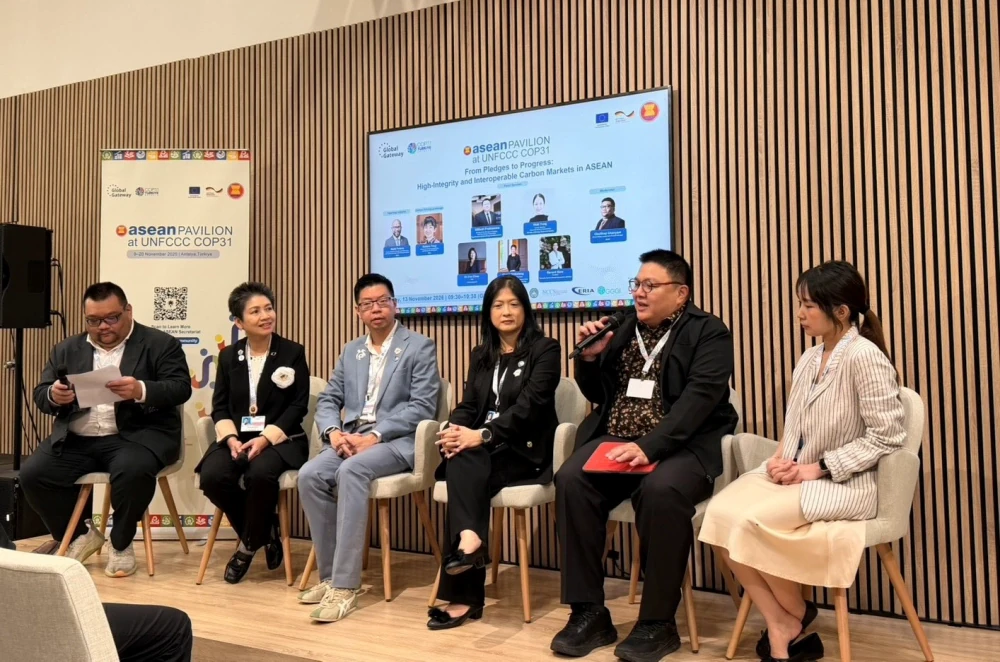
Following the exchange, Mrs. Gloyta joined the panel “ASEAN’s Voice in Global Climate Action” at the Singapore Pavilion with Anshari Rahman, ACCF Co-Chair, Natalia Rialucky Marsudi of AACM, and Dr. Renard Siew, President of MCMA. Moderated by Ms. Amy Merrill, CEO of the Integrity Council for the Voluntary Carbon Market (ICVCM), the discussion focused on clarifying the rules for using carbon credits, improving access to project finance, and bringing ASEAN perspectives into discussions on international standards. On 13 November, Mrs. Gloyta also joined “From Pledges to Progress: High-Integrity and Interoperable Carbon Markets in ASEAN” at the ASEAN Pavilion, alongside Dr. Kittisak Prukkanone, Director of the Division of Strategy and International Cooperation at Thailand’s Department of Climate Change and Environment, Ms. Vicki Yong, Deputy Director for Green Economy and Sustainability at Singapore’s Ministry of Energy, Trade and Industry, Ms. Oi-Yee Choo, CEO of Climate Impact X, representing SSFA, and Dr. Renard Siew. Mr. Chatthep Chanyam, Senior Policy Analyst and Project Manager at the Global Green Growth Institute (GGGI), moderated the discussion on how ASEAN countries can connect their markets, standards and rules so that high-integrity carbon credits can be recognized and used across borders.