


27 November 2026
ASEAN Carbon Markets: From COP29 to COP31
Industry Cooperation on High Integrity and Interoperability through the ASEAN Common Carbon Framework (ACCF)
Carbon credits are one tool that organisations and countries use in their plans to reduce greenhouse gas emissions and work towards net zero.
One carbon credit represents the equivalent of one tonne of carbon dioxide that a project has reduced or removed, as verified and certified under an applicable standard. Most carbon credit trading, however, still takes place within national markets because countries differ in which credits they accept and what those credits can be used for. Rules are beginning to allow more flexibility. Under Article 6.2 of the Paris Agreement, participating countries can agree to transfer authorised emissions reductions or removals for use towards the receiving country’s climate targets. The countries involved adjust their emissions accounting to avoid double counting.
When buyers consider purchasing carbon credits across borders, two questions arise. How can they verify the credits from a particular project, and what do the applicable rules allow them to use those credits for?
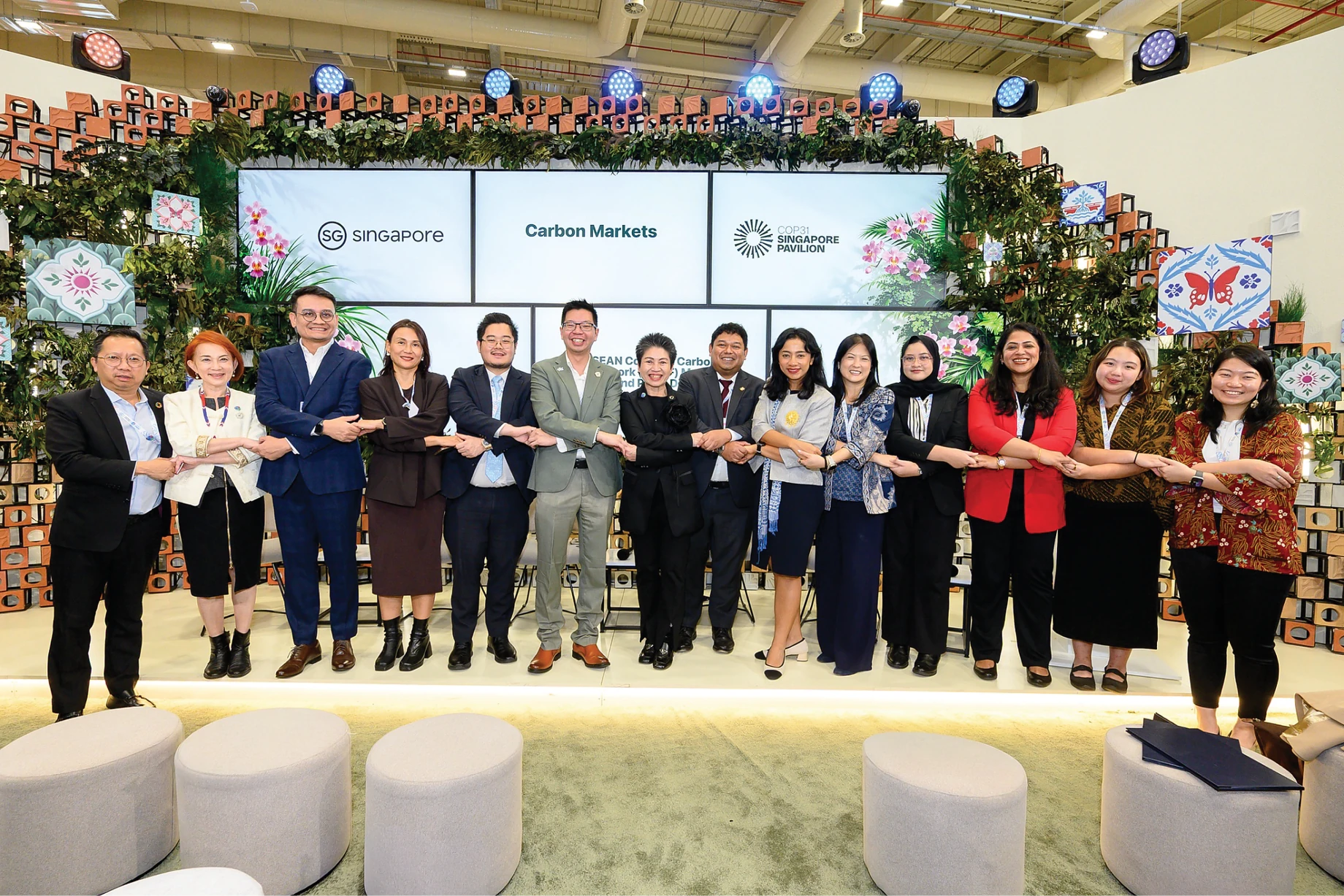
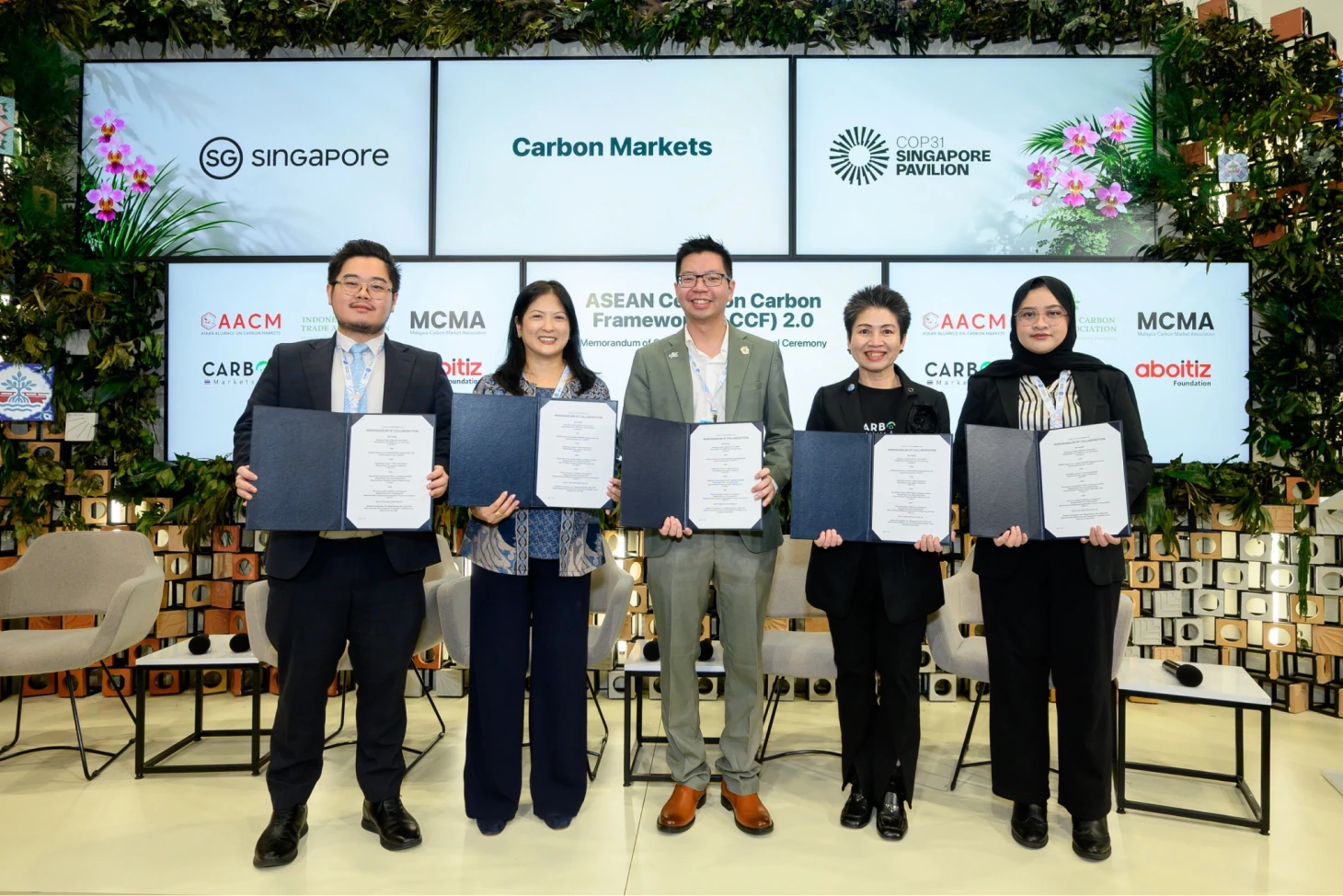
Those questions led to the agreement establishing the ASEAN Common Carbon Framework (ACCF). The Thailand Carbon Markets Club (TCMC) and four other private sector organisations in ASEAN signed the agreement in November 2024 at COP29, the 29th Conference of the Parties to the United Nations Framework Convention on Climate Change, in Azerbaijan. The other signatories were the Malaysia Carbon Market Association (MCMA), the ASEAN Alliance on Carbon Markets (AACM), the Indonesia Carbon Trade Association (IDCTA) and the Singapore Sustainable Finance Association (SSFA). They agreed to work together to find ways to connect carbon markets that operate under different rules.
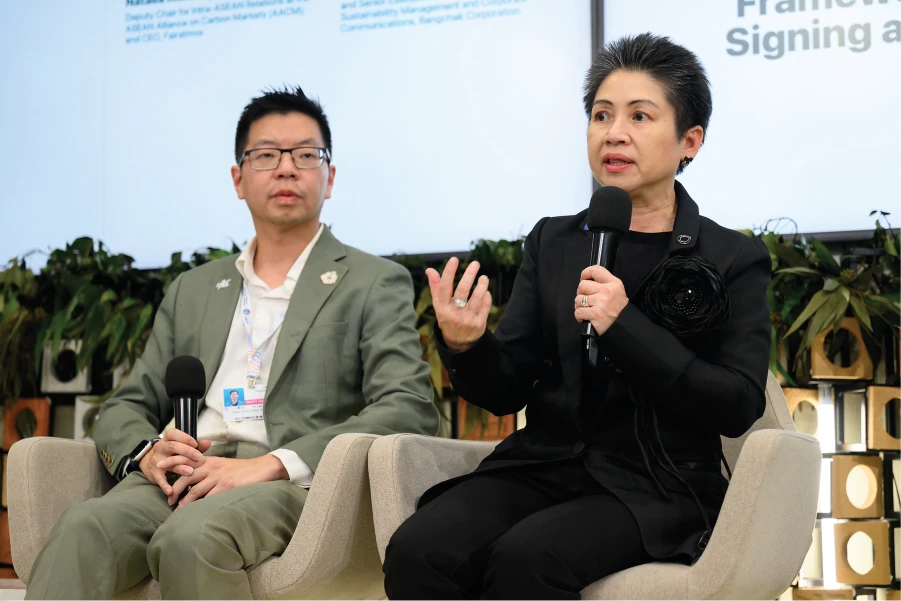
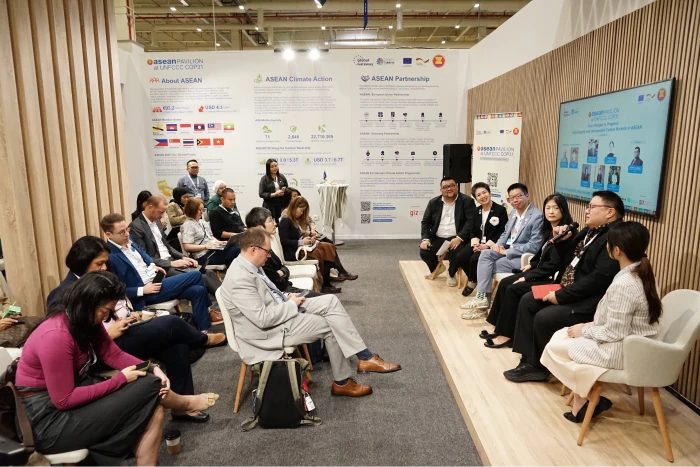
In November 2026, the five signatories renewed their cooperation for another two years at COP31 in Türkiye. Bangchak Reflections invited Gloyta Nathalang, Senior Executive Vice President for Sustainability Management and Corporate Communications at Bangchak Corporation Public Company Limited, to reflect on the ACCF’s first two years and what matters most over the next two. As Chair of TCMC and a member of the ACCF Steering Committee, Gloyta signed the original Memorandum of Collaboration (MoC) at COP29 and the renewed memorandum of collaboration (MoC 2.0) at COP31. She also took part in “ASEAN’s Voice in Global Climate Action” following the MoC exchange at the Singapore Pavilion, and “From Pledges to Progress: High-Integrity and Interoperable Carbon Markets in ASEAN” at the ASEAN Pavilion.
Gloyta explained that the ACCF grew out of a proposal championed by ASEAN-BAC Malaysia for the region’s private sector to work together on carbon market development. MCMA served as the ACCF’s first chair. Over the past two years, the ACCF has turned that proposal into a joint work plan and begun work in three areas. On supply and demand, we began developing guidance to help businesses choose and use high-integrity carbon credits alongside their own emissions reductions. On market infrastructure, we helped develop a database of carbon project methodologies so that people can compare how countries calculate and certify emissions reductions. On communications and capacity building, we developed a common communications approach and identity for engaging with stakeholders across the region.
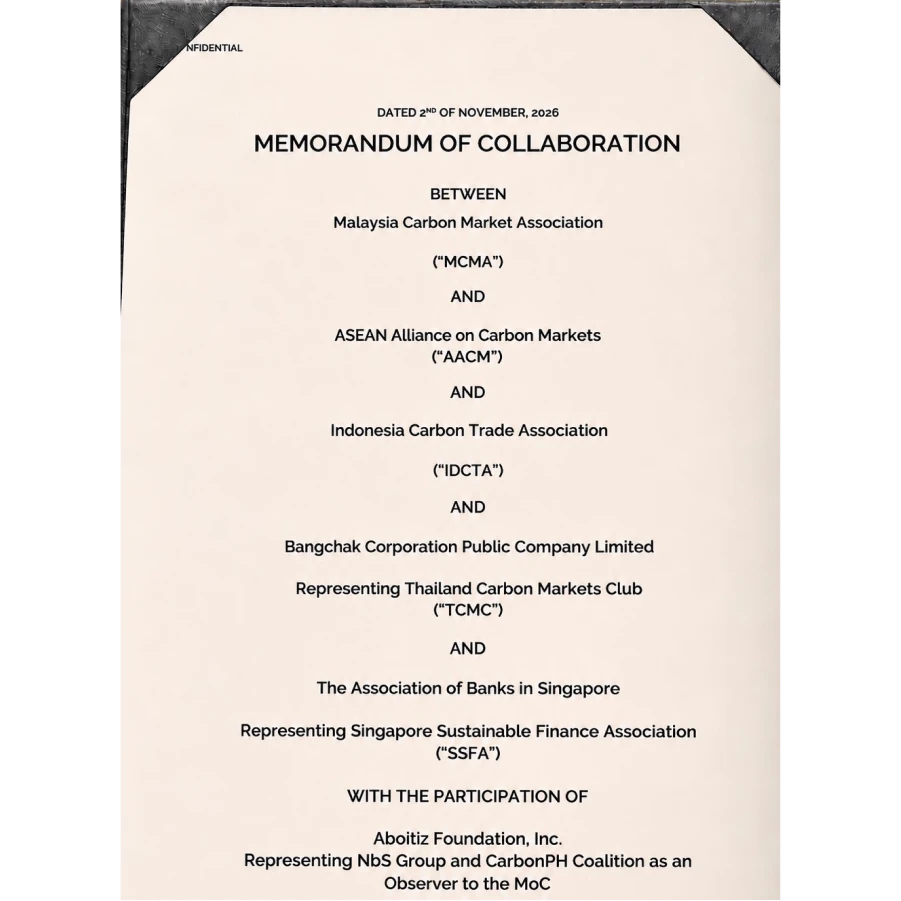
The renewal at COP31 also broadened regional participation, with Aboitiz Foundation from the Philippines joining as an observer. At the same time, all five signatories endorsed the shared principles of the Coalition to Grow Carbon Markets, a government-led initiative. Supporting these principles gives the ACCF an opportunity to bring ASEAN’s market experience into global discussions, particularly on how markets with different rules can recognise one another’s carbon credits.
The task for the next two years is to put the work already under way into practice. Gloyta explained that, under SSFA’s chairmanship, we will continue to work together and share what we learn to support governments. SSFA will work with the Singapore government as Singapore chairs ASEAN in 2027. We want buyers to have greater confidence in the quality of ASEAN credits, national markets to work together, and financing to reach projects that deliver real, verifiable emissions reductions and operate transparently.
She added that Thailand’s experience shows what recognition of a standard can achieve. Thailand began developing T-VER in 2014 and launched Premium T-VER in 2022 to bring its carbon credit standards into line with international criteria. The International Civil Aviation Organization (ICAO) recently approved Thailand’s Premium T-VER for the 2027–2029 phase of CORSIA, its carbon offsetting scheme for international aviation. Airlines that need to offset emissions under CORSIA can therefore buy credits from eligible Thai projects, giving project developers in Thailand access to a new group of potential buyers.
The two COP31 discussions Gloyta joined showed that buyers still have practical questions about credits from projects in another country. Which standard do they meet? What can they be used for? How should their use be reported? ASEAN countries can each use their own standards. What matters is agreeing on the conditions under which a credit issued under one standard will be accepted in another market. If member countries decide to develop a common standard in the future, they could consider using Thailand’s Premium T-VER as one starting point and build on the work already done.
Clarity about standards also matters for financing. Many projects in ASEAN already meet certification requirements, but financiers still need to know who will buy the credits a project issues in the future and at what price. Buyers are more likely to commit to purchasing credits in advance if they are confident the credits will be accepted in the market where they plan to use them. An agreement that specifies the volume and price makes it easier for financiers to assess whether the revenue will cover project costs. Another option is to share the risk among several financing providers, particularly for projects that use natural processes to remove carbon and may take years to issue credits for sale.
The ACCF’s next phase therefore includes developing guidance to help buyers make decisions, creating a framework for financiers to assess projects, and examining where differences in national laws and registries create barriers to cross-border trading. We are also preparing to establish a knowledge-sharing network and aim to pilot transactions by COP32. Real transactions will help us see which procedures can work across markets and which issues need further discussion with government agencies.
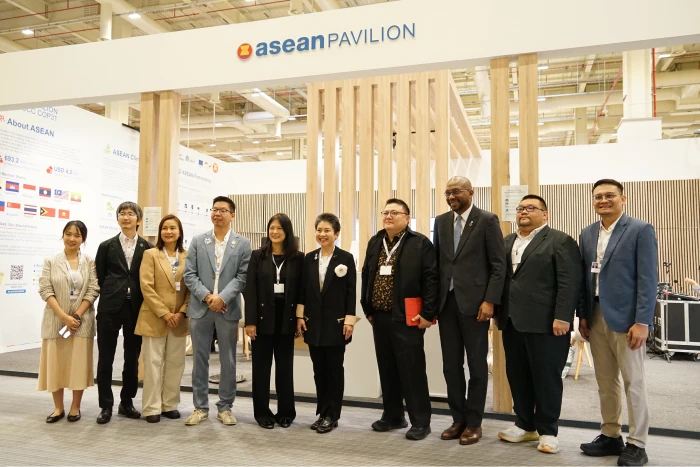
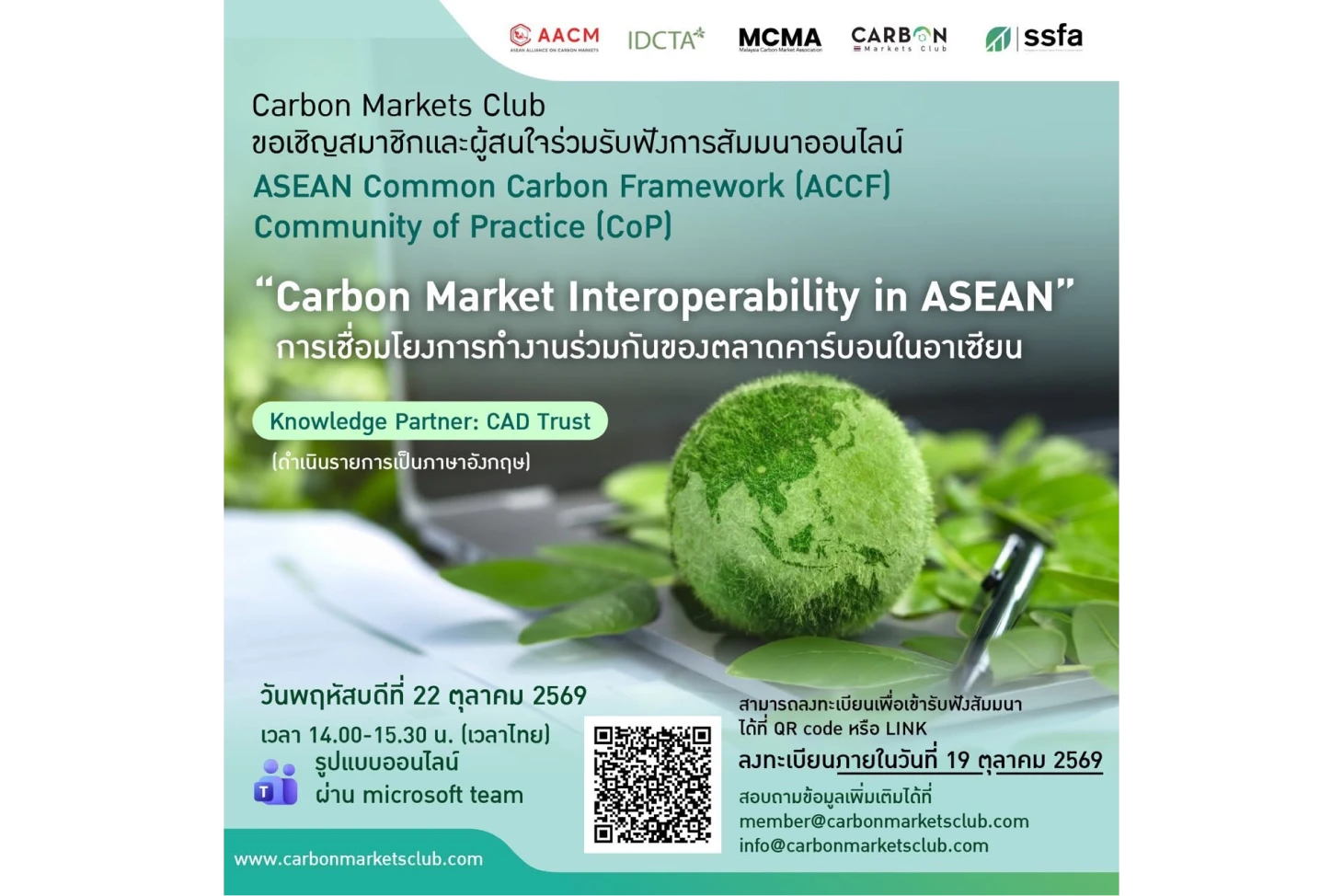
On the government side, Thailand’s Department of Climate Change and Environment initiated the High-Integrity ASEAN Carbon Initiative (HACI), a platform for cooperation on high-integrity carbon markets and transition finance. The ACCF can support governments by sharing what its signatories learn through their work together. Pilot transactions, for example, can show what information buyers need to verify that credits from another country are eligible for their intended use, and what kinds of purchase agreements help financiers assess project revenue. These lessons give ASEAN something concrete to bring to discussions through the Coalition to Grow Carbon Markets. The region can share what it takes for markets with different standards and rules to recognise one another’s credits, give buyers confidence in their quality and make it easier for projects to secure financing.
Gloyta sees a basic understanding of carbon as essential to using these tools credibly, whether in businesses, educational institutions or the wider community.
For businesses, I always emphasise the importance of reducing their own emissions first, then using high-integrity carbon credits to offset only the emissions they still cannot avoid. At the same time, we need to do more to help people understand carbon. Before long, carbon management planning, carbon pricing and carbon taxes will feature more prominently in our work and even in everyday life. That’s why I’d like to see educational institutions offer carbon management as a foundational subject, alongside other foundational subjects.