

26 August 2026
Bangchak Group CEO Takes the Stage at “New Energy for Thailand”
Highlights Biofuels’ Potential to Generate Economic Value Equivalent to Around 2% of Thailand’s GDP, Reduce Oil Imports and Strengthen Energy Security
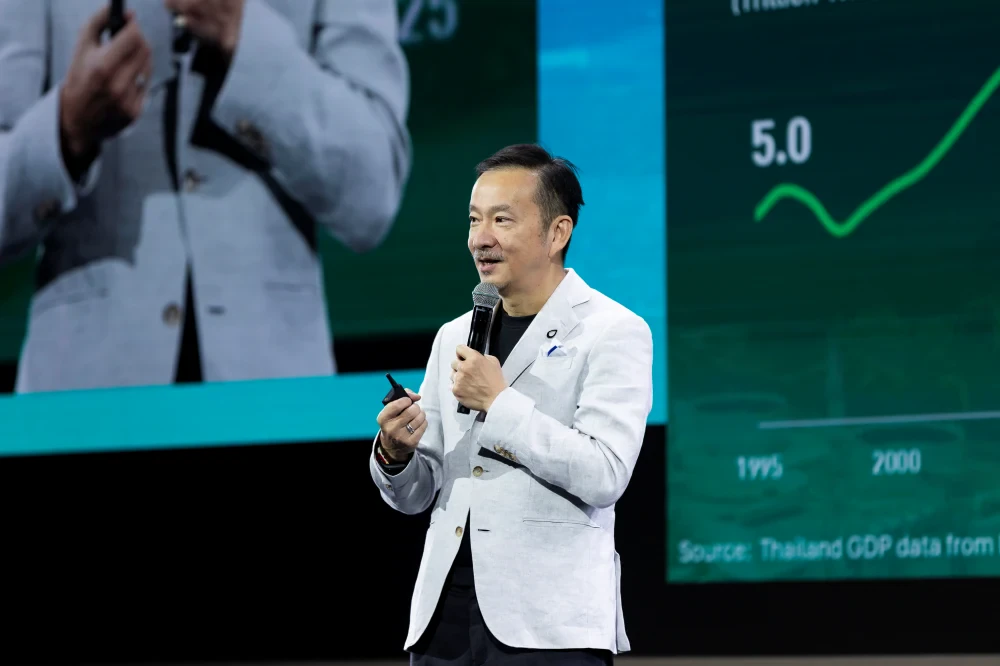
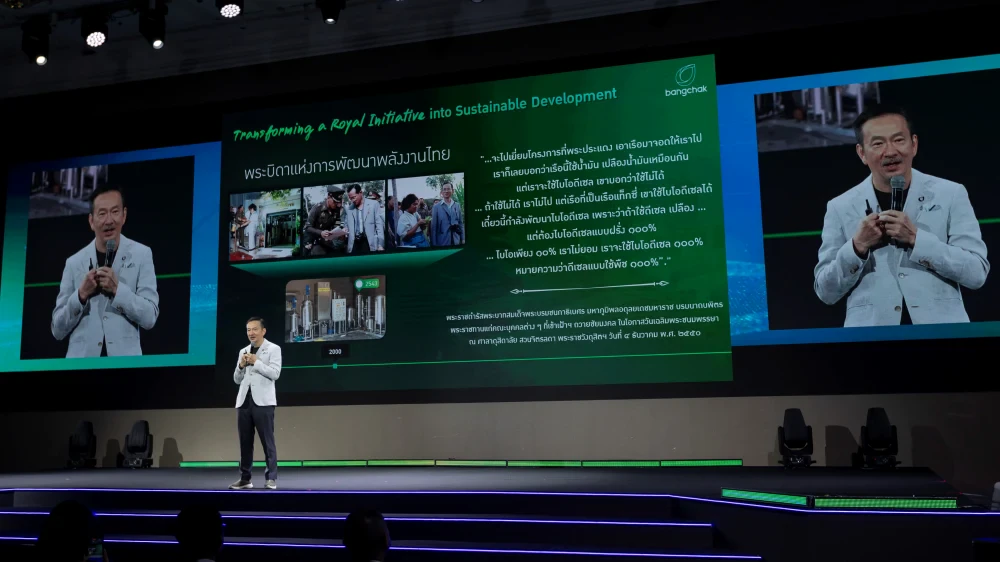
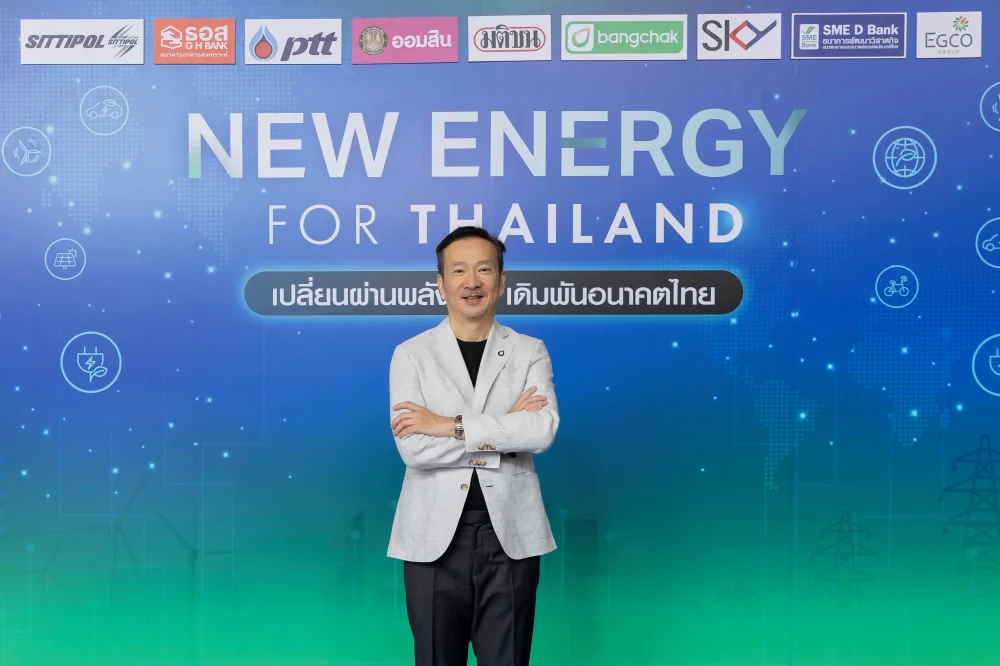
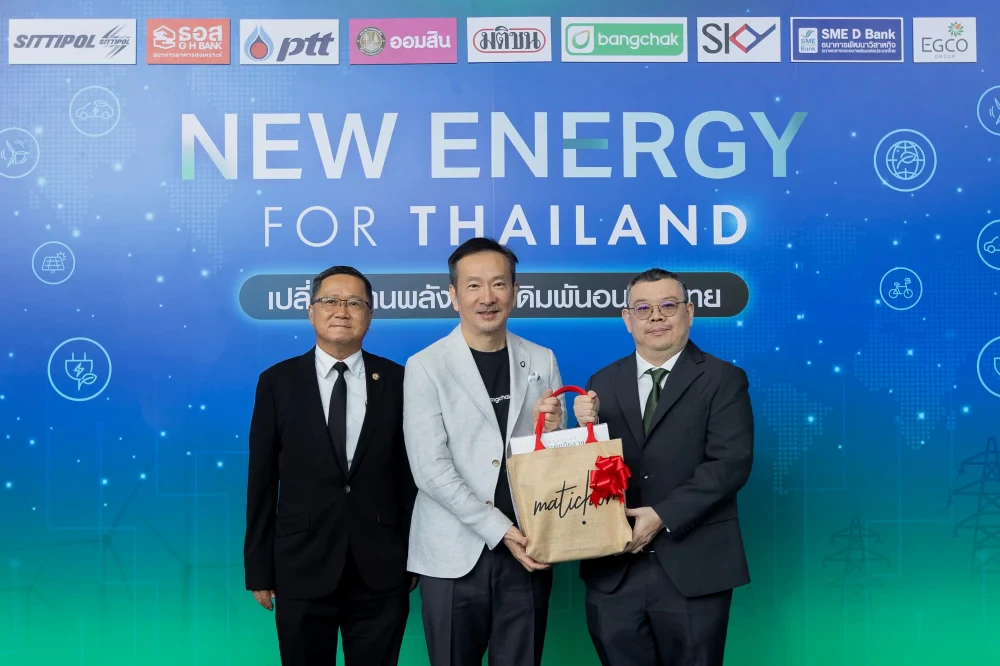
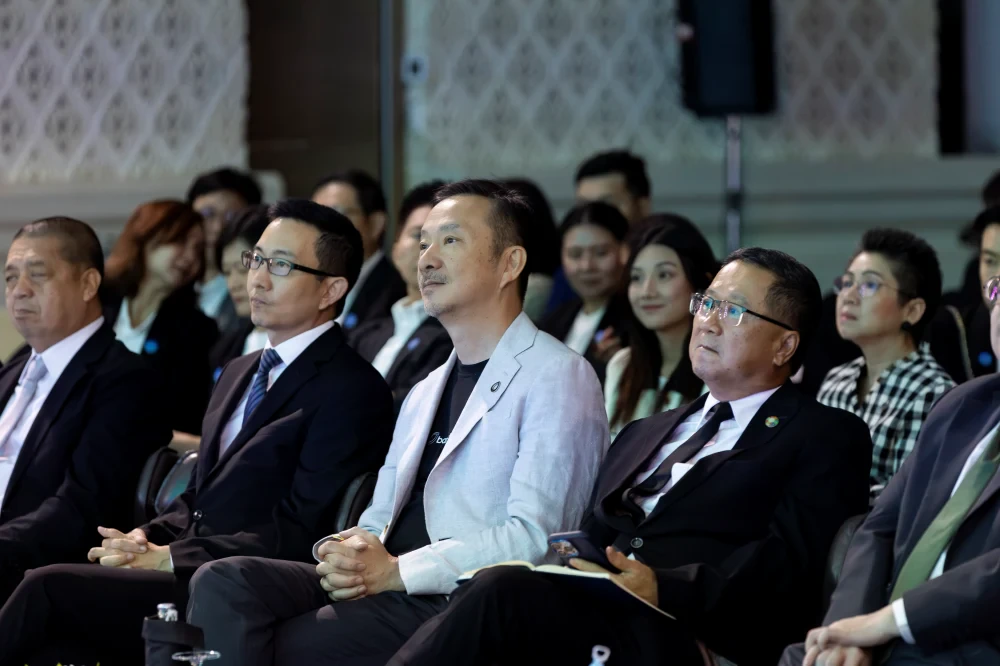
Mr. Chaiwat Kovavisarach, Group Chief Executive Officer and President, Bangchak Corporation Public Company Limited, delivered a special talk at “New Energy for Thailand: Energy Transition, Thailand’s Future at Stake,” organized by Matichon’s editorial team on 26 August 2026 at Pullman Bangkok King Power. In a special talk titled “Greenovation: Energy Alternatives to Drive Thailand’s Economy,” he shared his perspective on how Thailand can navigate an increasingly complex energy landscape shaped by geopolitical uncertainty, intensifying competition for resources as AI expands rapidly, and a growing need for energy security and resiliency. He stressed the importance of balancing “Just-in-Time” efficiency with “Just-in-Case” preparedness.
Transportation remains a major driver of energy demand. In Thailand, the sector accounts for 41% of total final energy consumption and approximately 76% of primary oil consumption. These realities underscore the need for multiple pathways in the transport energy transition, including electrification and low-carbon fuels, while taking into account the country’s existing infrastructure and energy system.
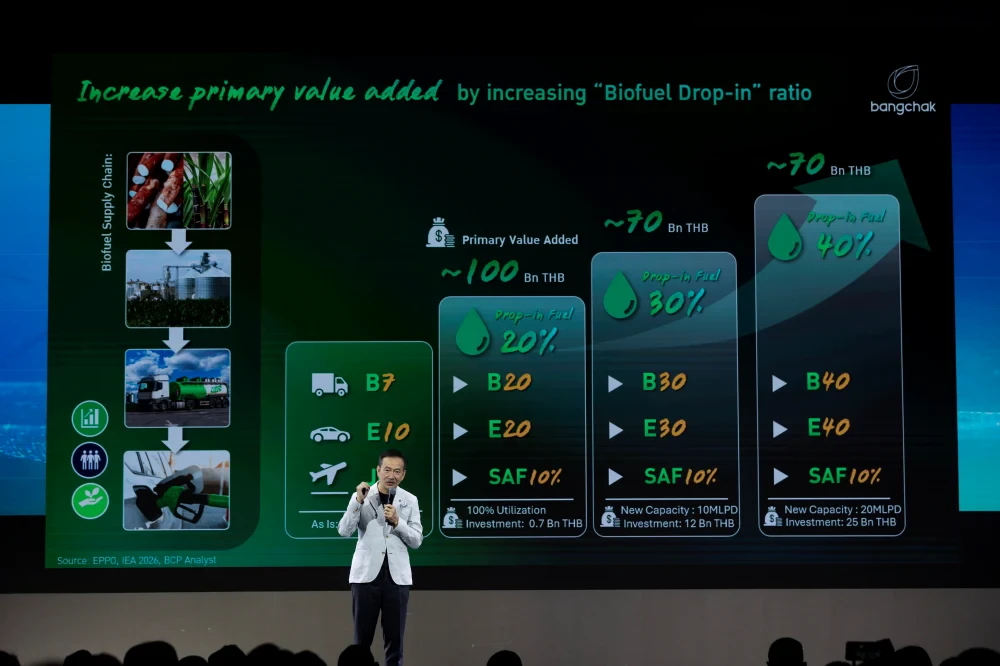
Fully electrifying Thailand’s transport sector would require around 400 TWh of additional electricity annually — nearly twice the country’s current annual electricity consumption — equivalent to around 46,000 MW of average power demand. It would also require approximately THB 1.8 trillion in additional investment in power generation, transmission and charging infrastructure. Alongside electrification, Thailand can leverage its existing energy infrastructure by increasing the use of drop-in biofuels, providing another practical pathway to reduce dependence on imported crude oil while keeping more economic value within the country.
The analysis presented showed that increasing the share of drop-in biofuels to 20% could generate economic value equivalent to around 2% of Thailand’s GDP, through approximately THB 153 billion in additional domestic spending and a reduction in oil imports of around THB 63 billion. Beyond strengthening energy security, this could support job creation, local income and domestic value chains.
Mr. Chaiwat also reflected on the pioneering work of His Majesty King Bhumibol Adulyadej The Great in alternative energy. His Majesty championed the use of resources that Thailand could produce domestically, including biodiesel from locally grown palm oil — an approach rooted in energy self-reliance and the prudent use of domestic resources that remains highly relevant to Thailand’s energy choices today.
This philosophy has long shaped Bangchak Group’s approach to biofuels. Today, the Group produces biofuels addressing transportation needs across air, road and marine sectors — from HEFA-SPK sustainable aviation fuel (SAF), with a production capacity of 1 million liters per day, to HVO, or green diesel, for road transport and B24 for the marine sector — extending Thailand’s domestic resources and capabilities into higher-value energy products.
“Every drop of biofuel produced in Thailand does more than replace imported fossil fuel. It creates local income, extends the economic value chain within the country, and provides a platform for higher-value products such as SAF, HVO and advanced bioproducts,” said Mr. Chaiwat.