



10 July 2026
From Biodiesel to SAF
From Renewable Energy to a Low-Carbon Ecosystem and a High-Value Bioeconomy
Over the past several years, Sustainable Aviation Fuel (SAF) has emerged as one of the world’s most promising solutions for reducing greenhouse gas emissions from aviation, one of the most difficult sectors to decarbonise.
Today, both the International Civil Aviation Organization (ICAO) and the International Air Transport Association (IATA) recognise SAF as a key pathway towards achieving the aviation industry’s long-term Net Zero ambitions. SAF is therefore more than an alternative aviation fuel. It also represents an opportunity to transform a nation’s biological resources into high-value products and industries that will help shape the future economy.
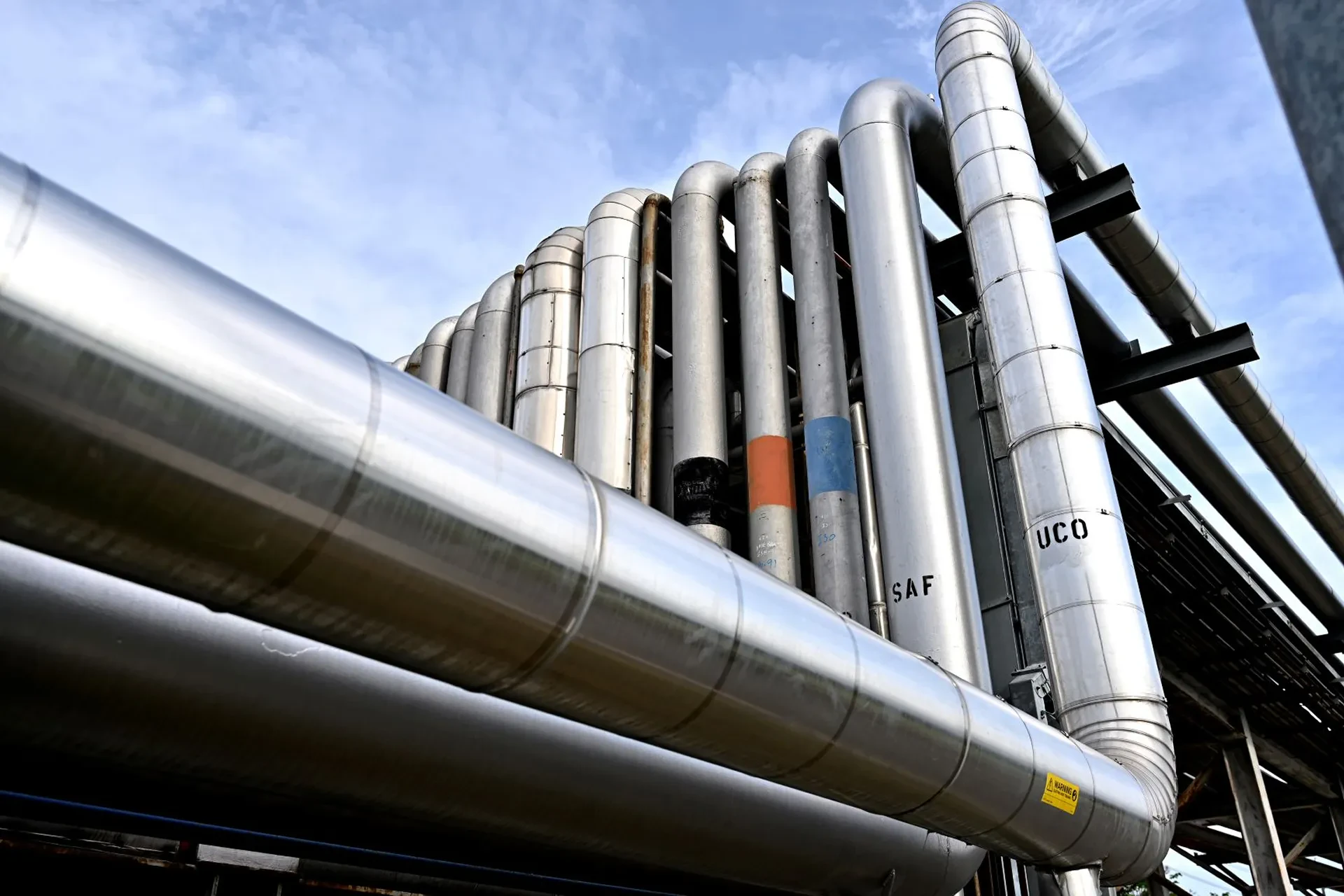
For Thailand, SAF may appear to be a relatively new development. For Bangchak Group, however, it is the outcome of a journey that began more than two decades ago.
In 2005, Bangchak pioneered the commercial production of biodiesel from used vegetable oil, inspired by the royal initiative of His Majesty King Bhumibol Adulyadej The Great. At a time when used cooking oil had only limited applications, Bangchak transformed it into a renewable energy source that delivered both economic and environmental value.
What began as biodiesel production later became an important foundation for the development of bioenergy and future energy solutions. It demonstrated how domestic resources, when supported by innovation and continuous development, can be transformed into higher-value products and create new economic opportunities.
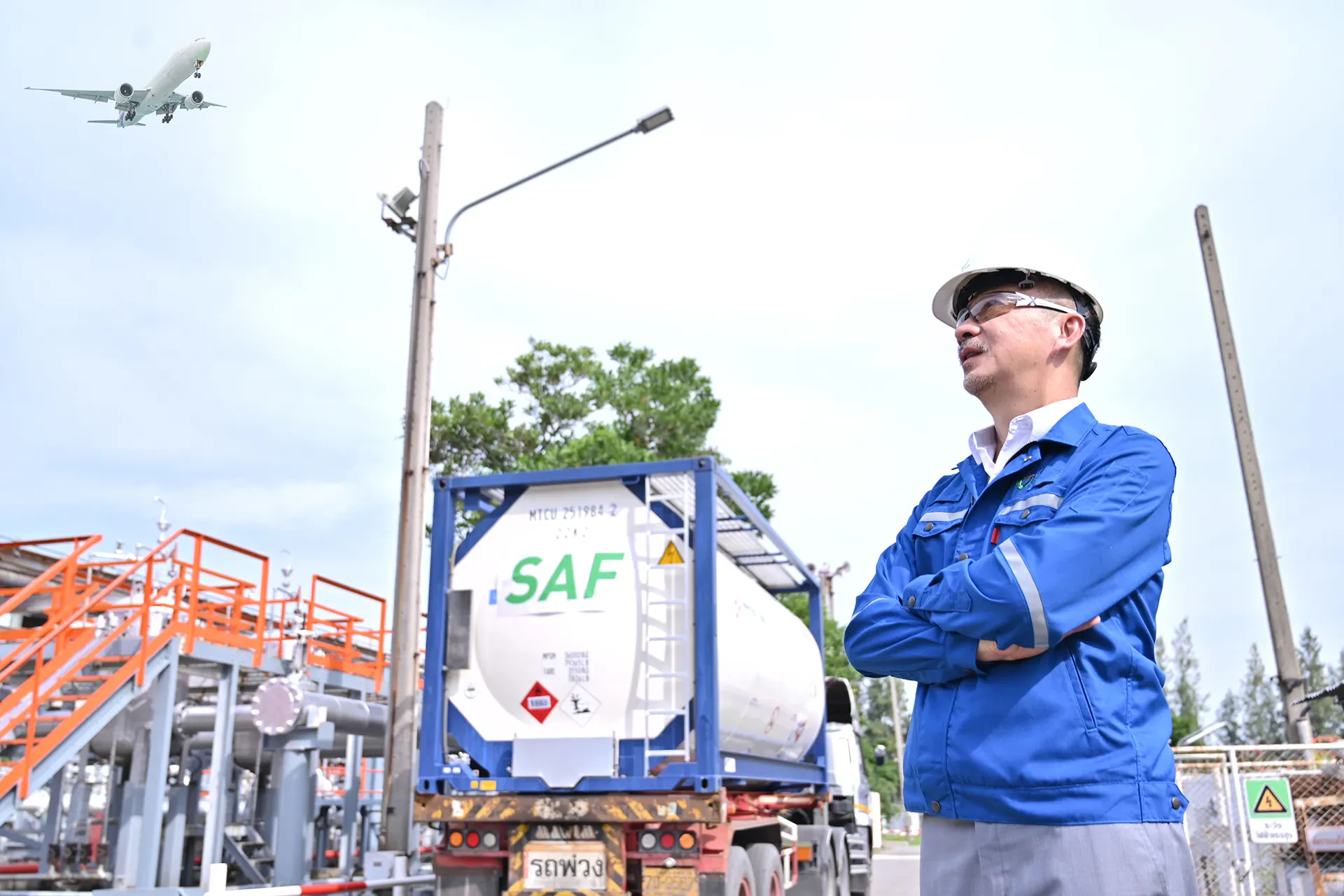
Over the past two decades, experience gained in biodiesel development, feedstock management, technology advancement, and partnership building has laid the foundation for a broader portfolio of low-carbon energy and high-value bio-based products. These include SAF, which is playing an increasingly important role in reducing greenhouse gas emissions from the aviation sector, Marine Biofuels for the maritime sector, HVO or Renewable Diesel for road transport, and Bio-Naphtha for the petrochemical industry.
In 2026, Bangchak commenced operations of Thailand’s first stand-alone HEFA-SPK SAF production unit, with an initial production capacity of one million litres per day. The facility has been certified under key international sustainability standards, including ISCC EU, ISCC CORSIA and ISCC PLUS, providing assurance that both feedstocks and products are fully traceable and compliant with global sustainability requirements.
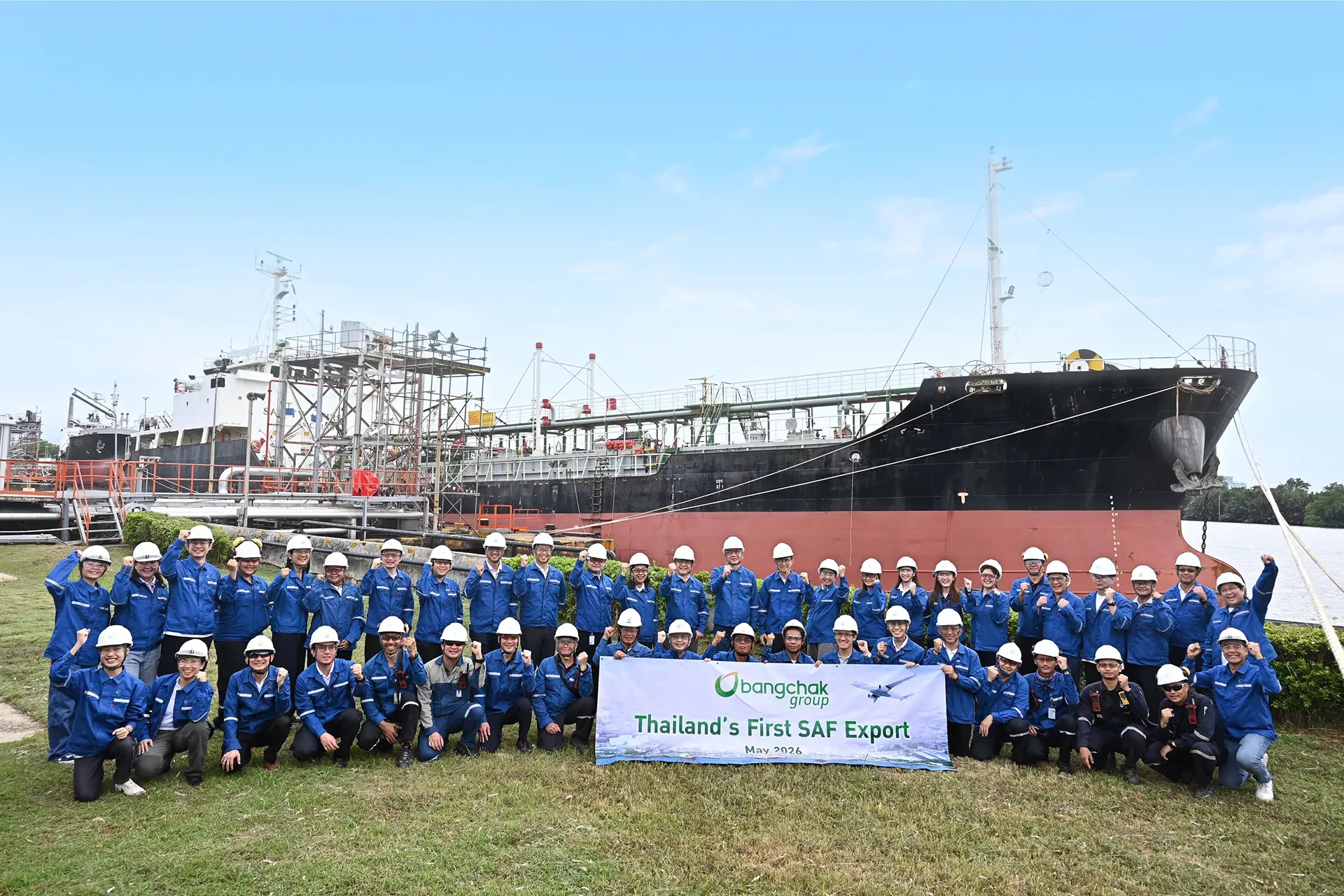
The Group also completed its first commercial export shipment to international customers on 19 May 2026, demonstrating Thailand’s potential to become an important participant in the global sustainable aviation fuel supply chain.
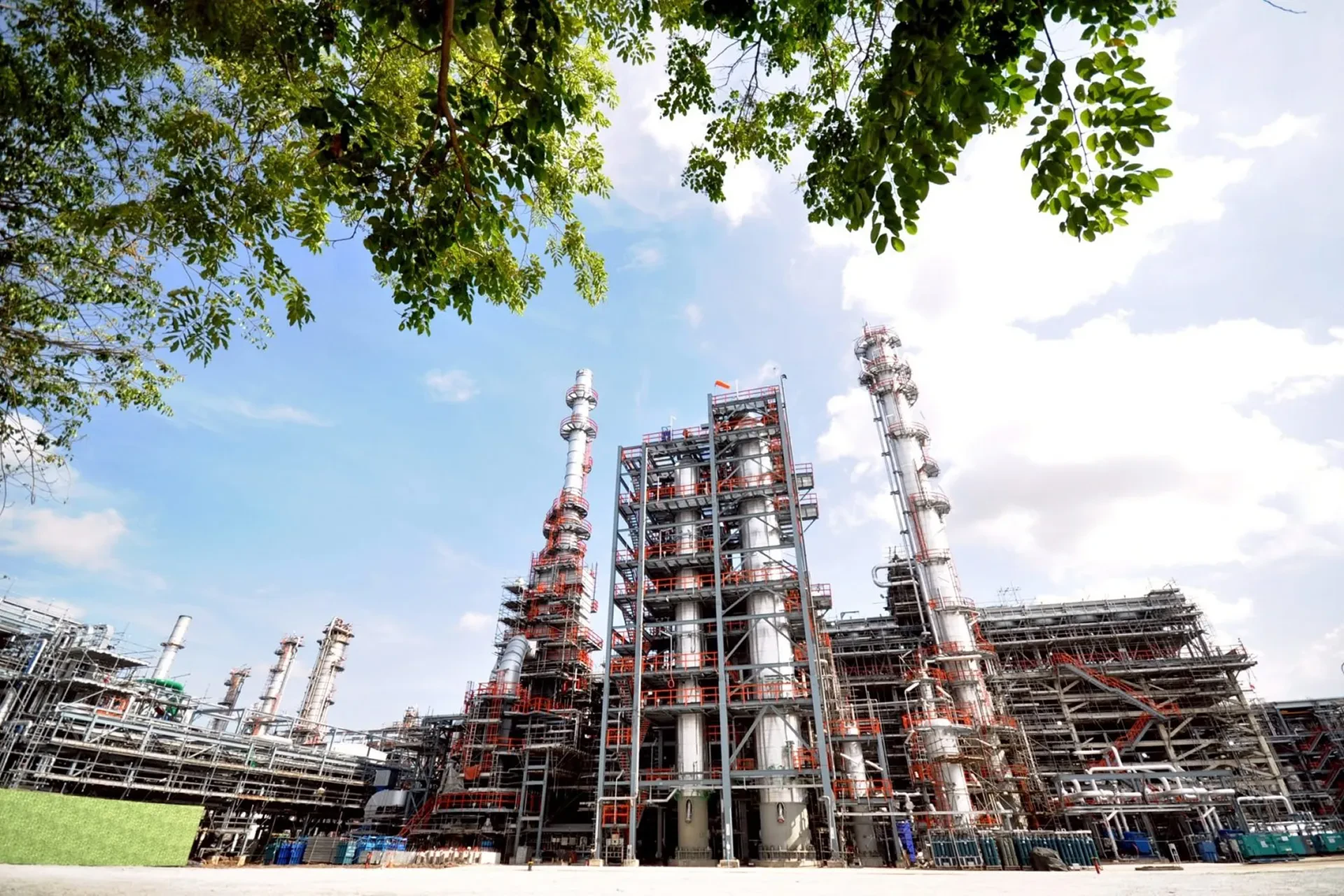
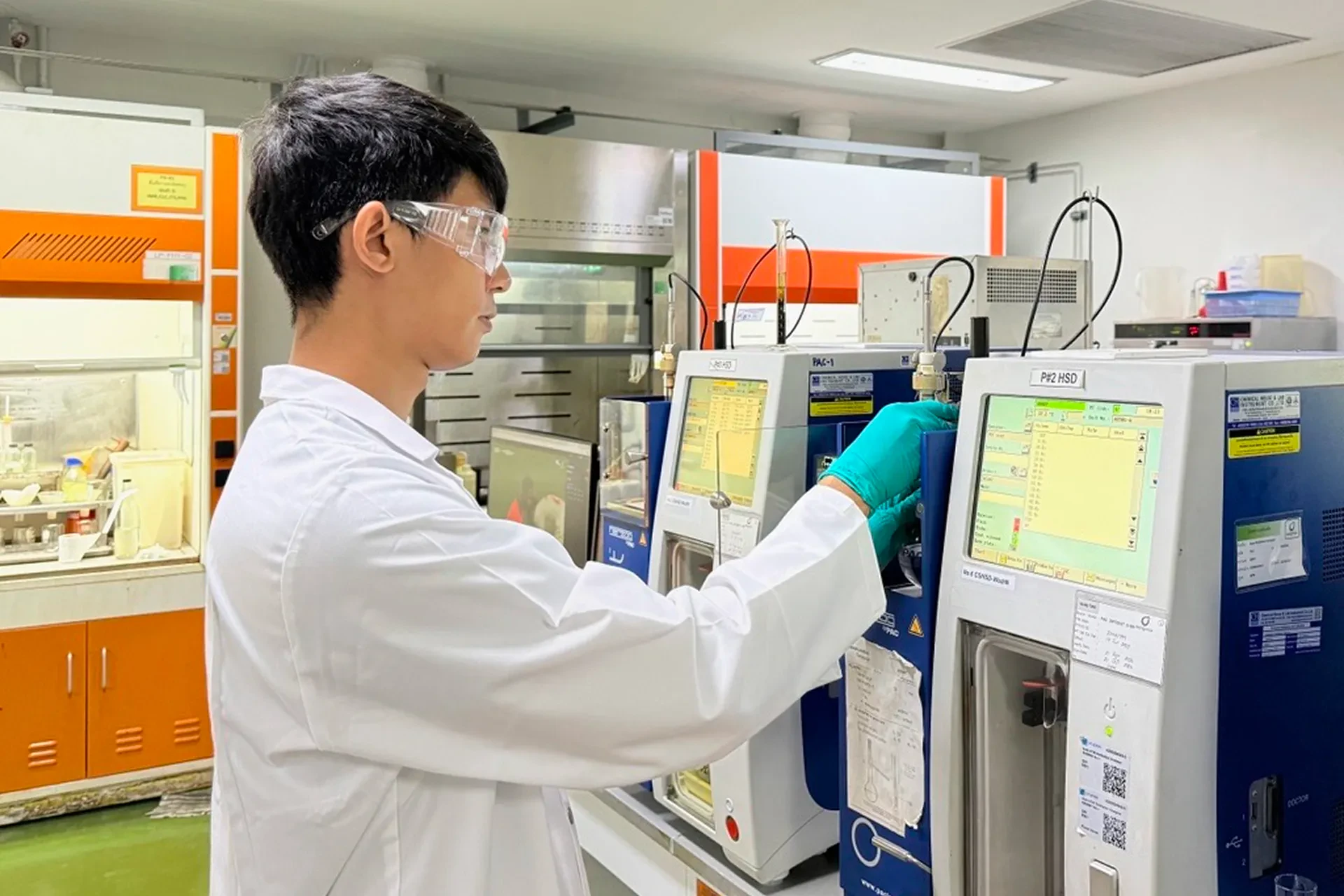
However, this achievement is not the result of production technology alone. It depends on an ecosystem that connects people and organisations across the entire value chain — from feedstock sourcing, technology and innovation development, and sustainability certification, through to end users.
Behind every litre of SAF produced at Bangchak’s Phra Khanong refinery lies a broad ecosystem involving households, restaurants, hotels, feedstock collectors, farmers, researchers, technology developers, industrial operators, and the aviation sector.
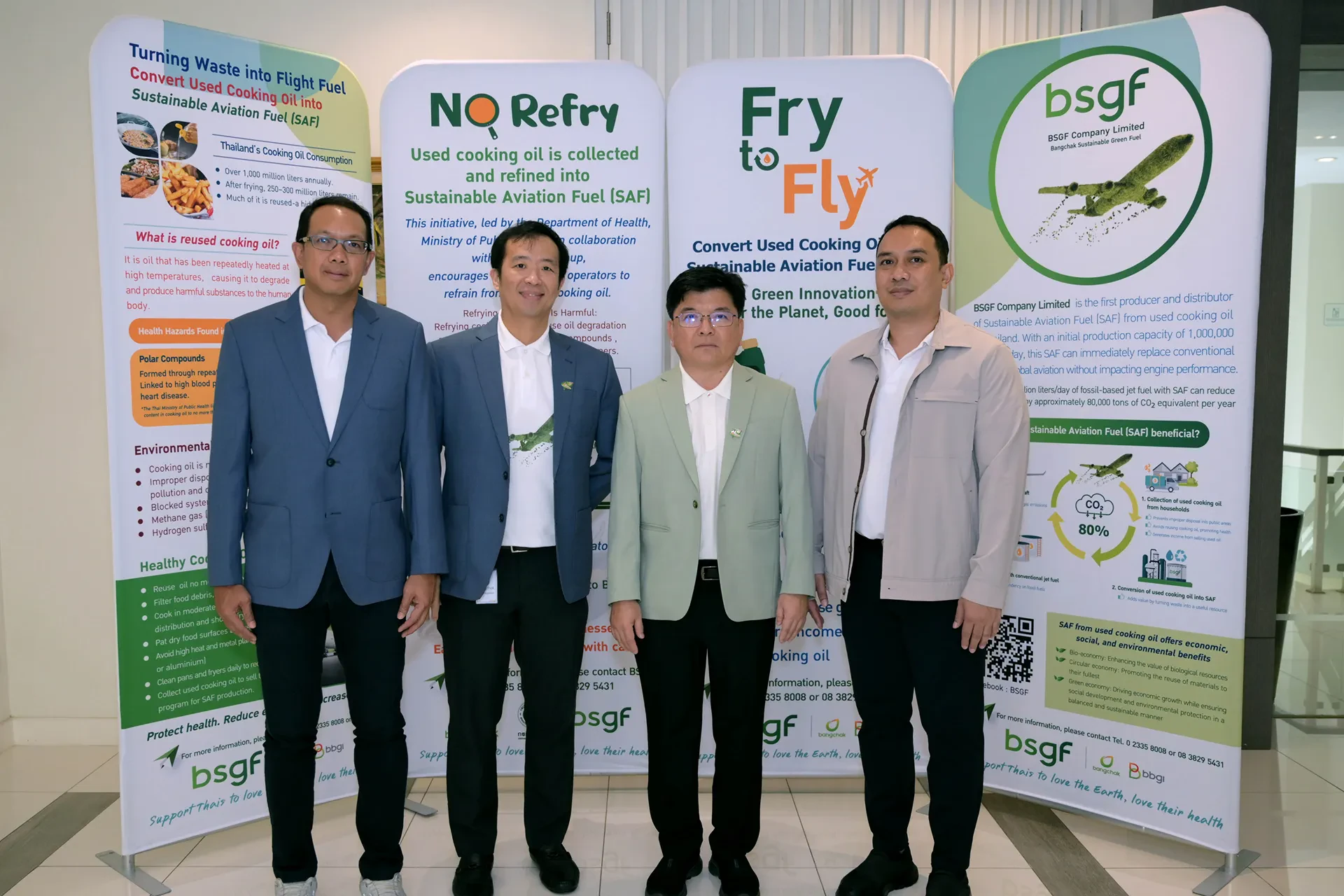
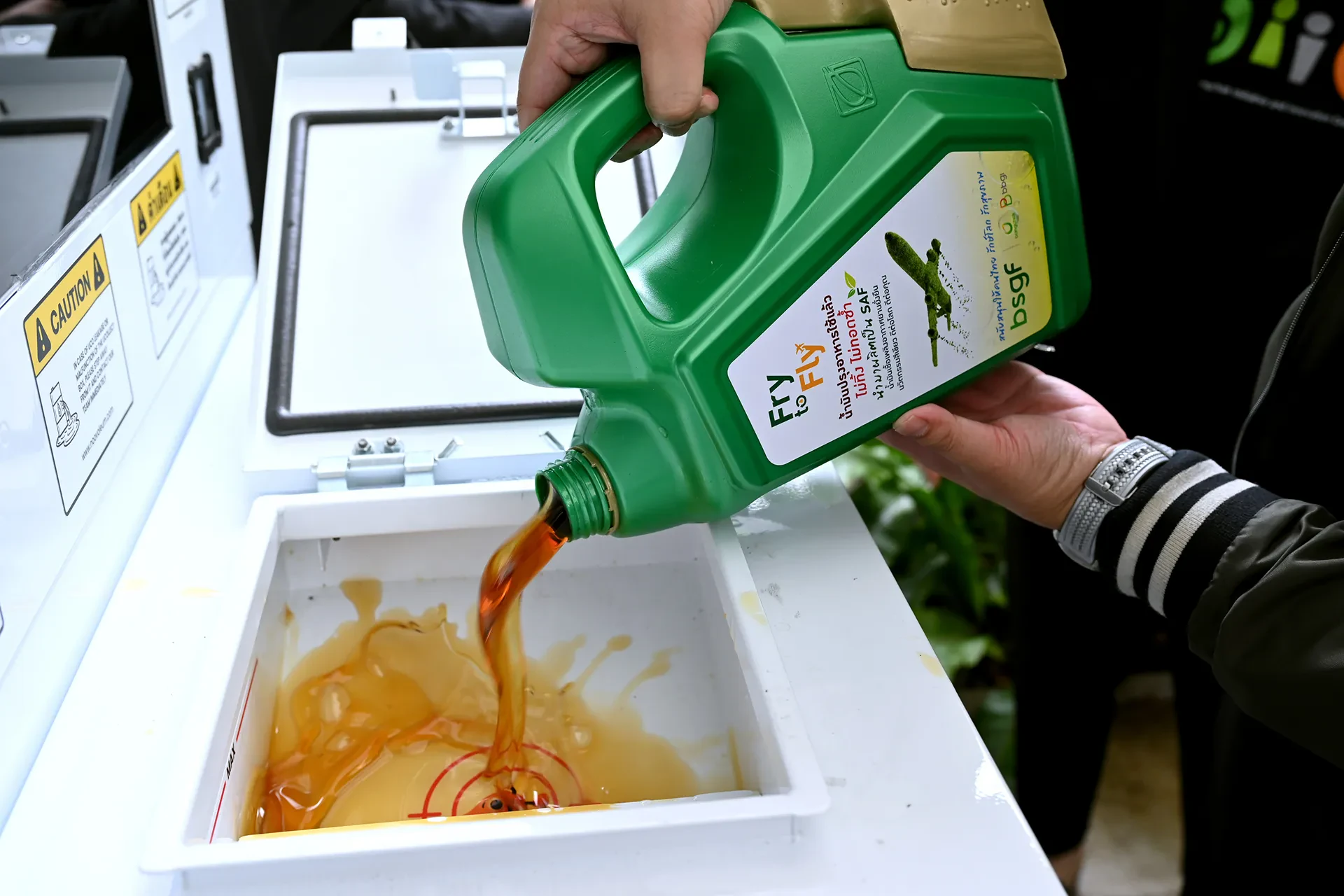
Used cooking oil is one of the key feedstocks in this ecosystem. Through the Fry to Fly initiative, used cooking oil is collected and returned to the system through more than 2,200 Bangchak service stations nationwide and an extensive network of partners, including government agencies, private-sector organisations and educational institutions. This transforms waste generated by households, restaurants and businesses into low-carbon energy while simultaneously creating income opportunities for collectors and others throughout the value chain.
To support future growth, Bangchak has also introduced innovations such as the Ucollect Box, an automated used cooking oil (UCO) collection system designed to improve convenience, transparency and collection efficiency. The system also supports traceability in accordance with international standards, a critical requirement for the sustainable aviation fuel industry.
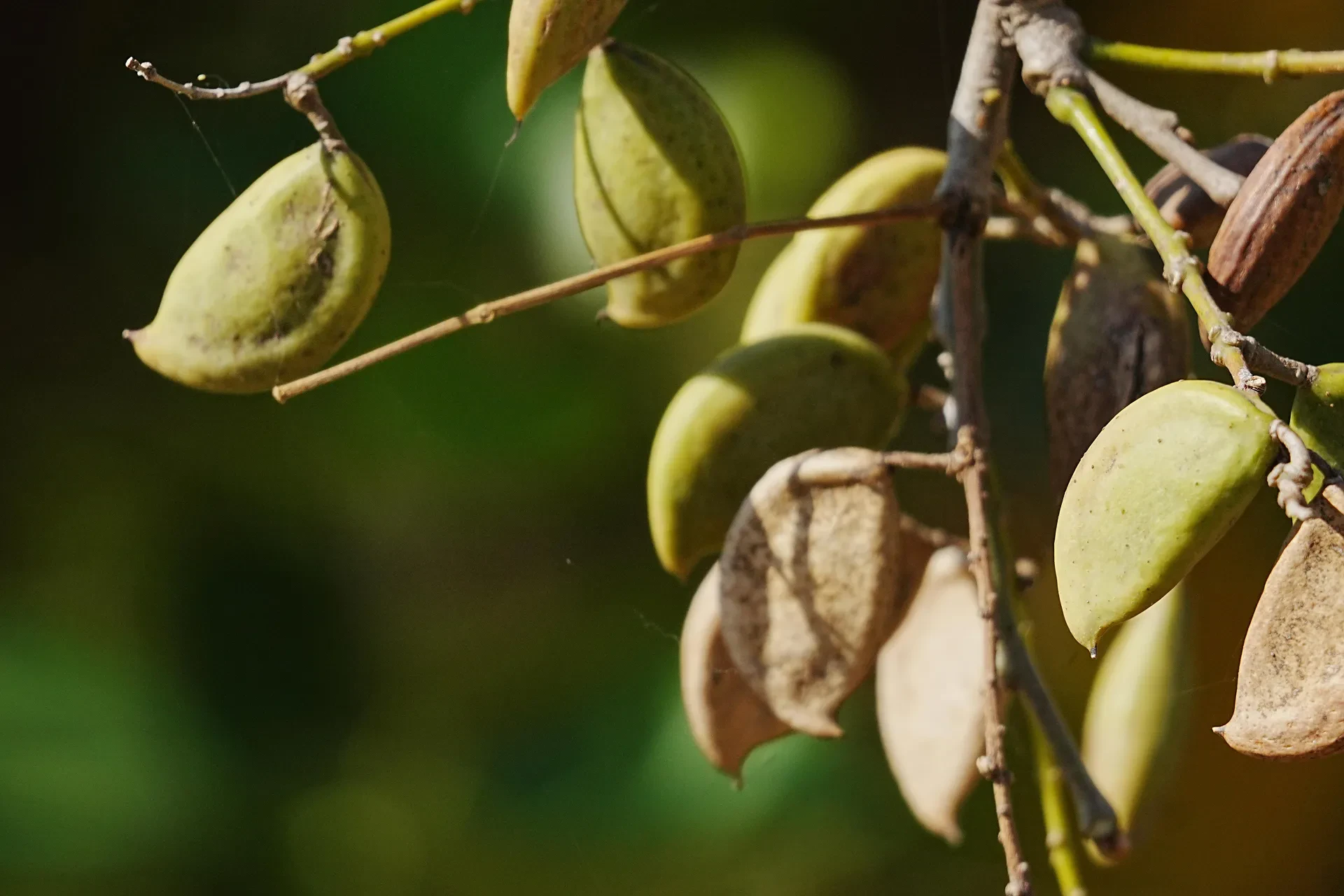
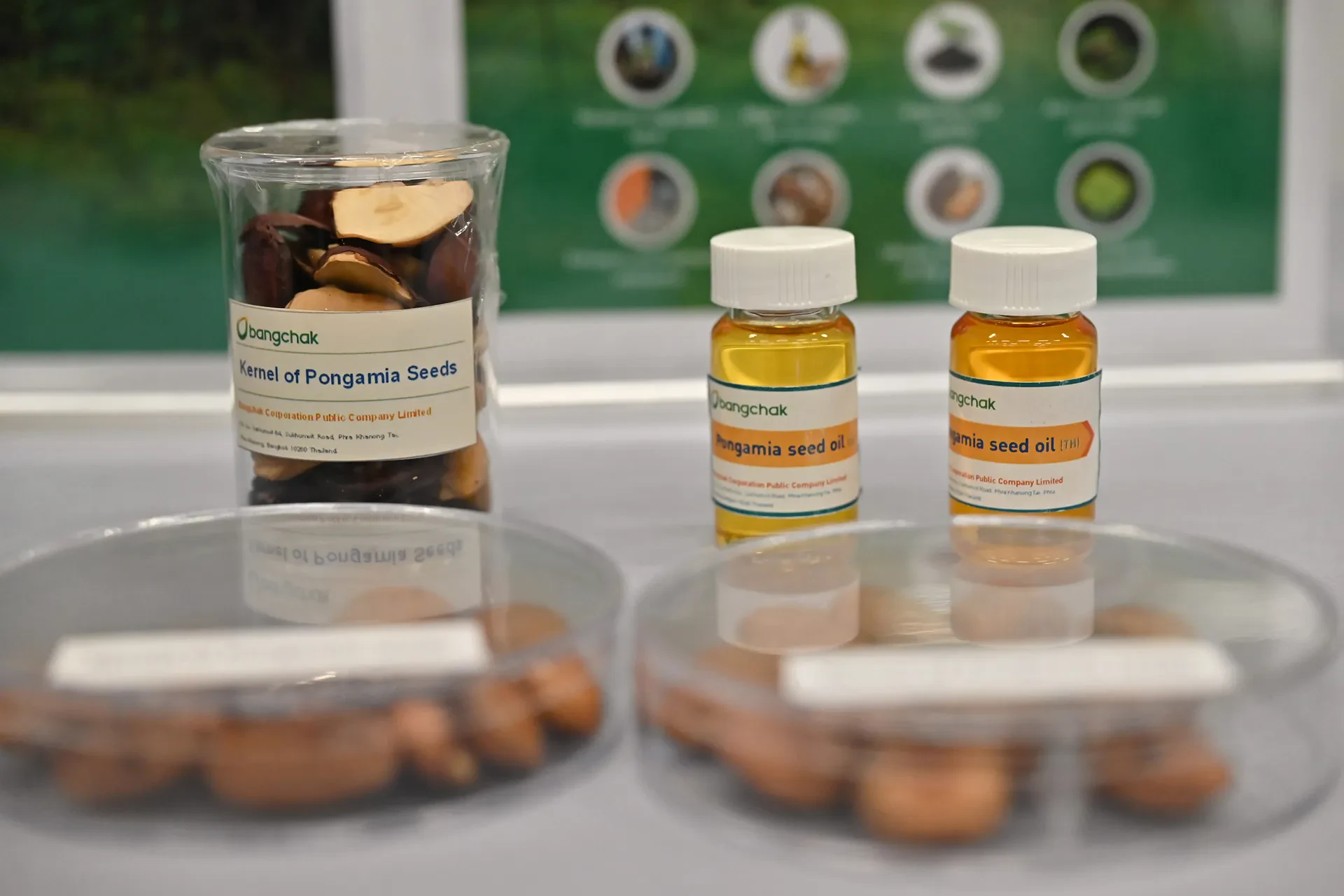
Looking ahead, this ecosystem extends beyond used cooking oil. It also includes research and development of alternative oil-bearing crops under the Farm to Fly concept, such as Pongamia, which has the potential to serve as a SAF feedstock without competing with food production. Such initiatives create new economic opportunities for the agricultural sector while strengthening long-term feedstock security.
What is emerging is a model for creating greater value from domestic resources — from household waste and agricultural feedstocks to environmental attributes that can generate new sources of income and economic opportunity. This value creation spans bio-based products, biomaterials, carbon market mechanisms and carbon credits, all of which are becoming increasingly important within the global economy.
It also demonstrates that resources once regarded as waste can be transformed into new sources of value through innovation, technology and collaboration. Together, these developments highlight the potential of a high-value bioeconomy that generates greater economic value from biological resources, residual materials and environmental assets through modern technologies, market mechanisms and innovation.
For Bangchak Group, the journey from pioneering renewable energy through the development of biodiesel in 2005 to leading the future of energy through HEFA-SPK SAF production in 2026 represents more than the evolution of energy technology. It demonstrates how domestic resources can be transformed into higher-value products by connecting energy, agriculture, industry, and the environment in a tangible and practical way. This, in turn, provides an important foundation for a high-value bioeconomy and for Thailand’s sustainable growth in the years ahead.